April 25 – May 30, 2026
Opening reception: April 25, 2:00 pm to 5:00 pm
as-is Gallery is pleased to present an exhibition of Los Angeles-based artist Lincoln Tobier, his first with the gallery.
This exhibition brings together a group of new works—ceramic sculptures made between 2022 and 2025, and one older work—a large flat enamel-on-steel work from 2002.
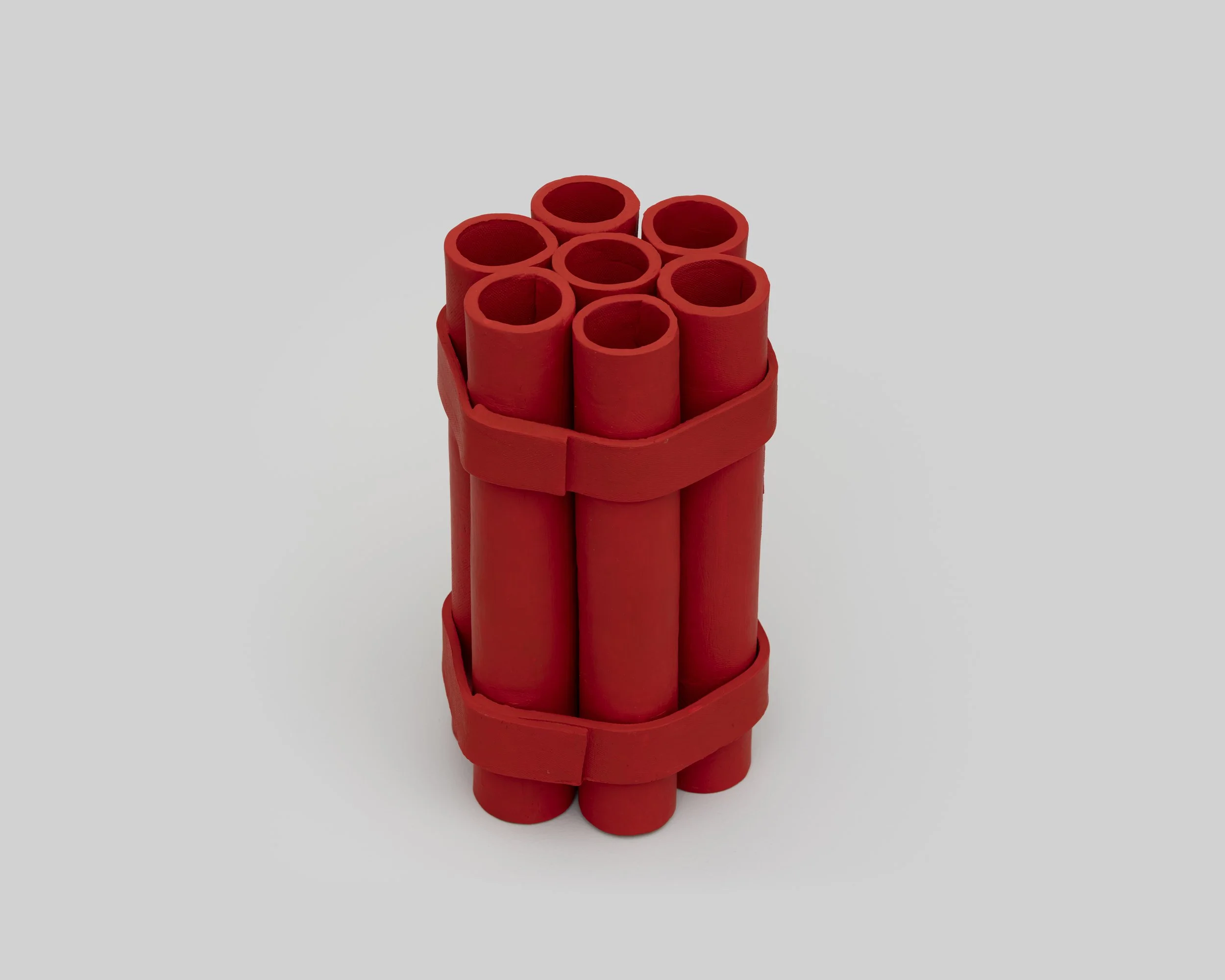
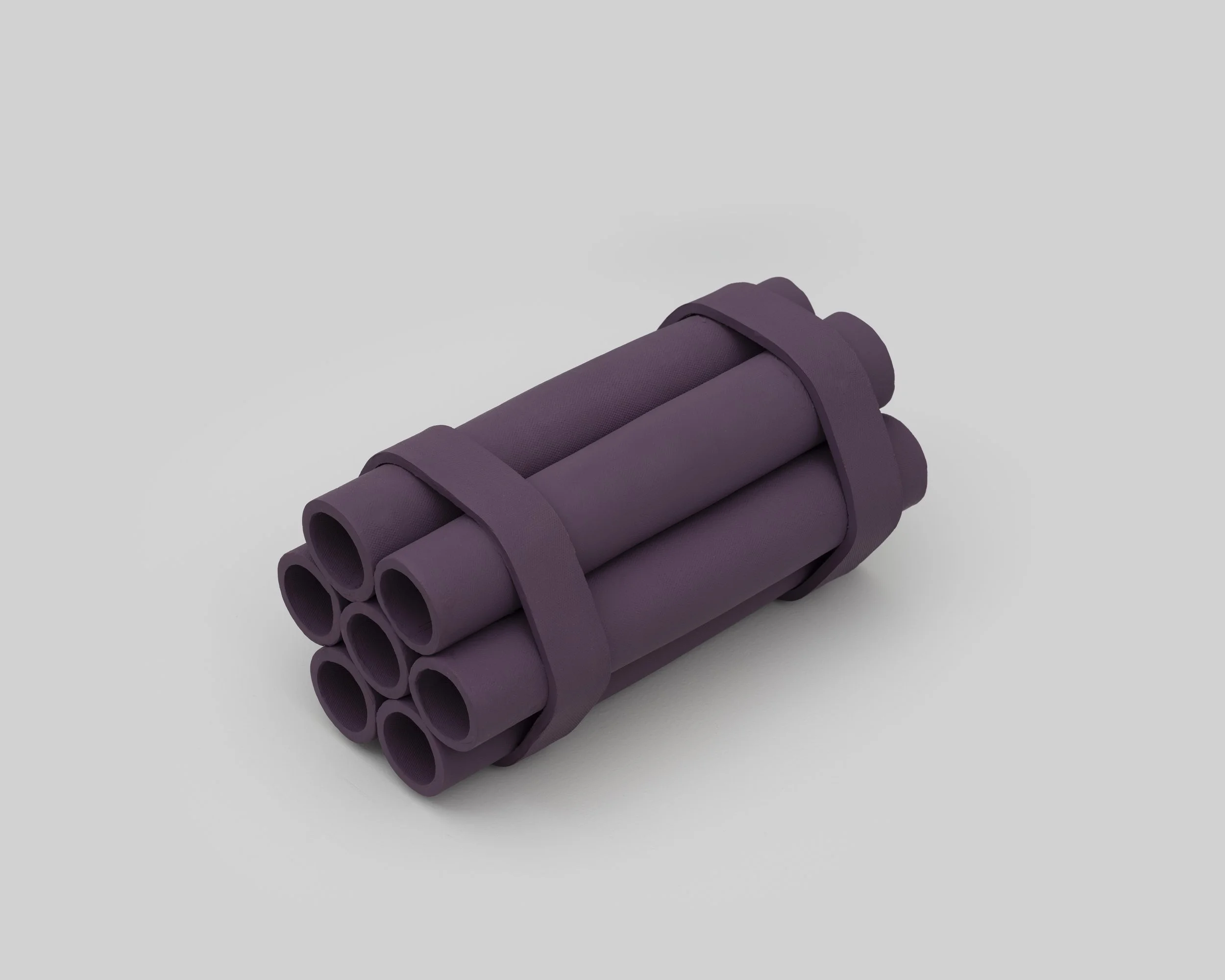
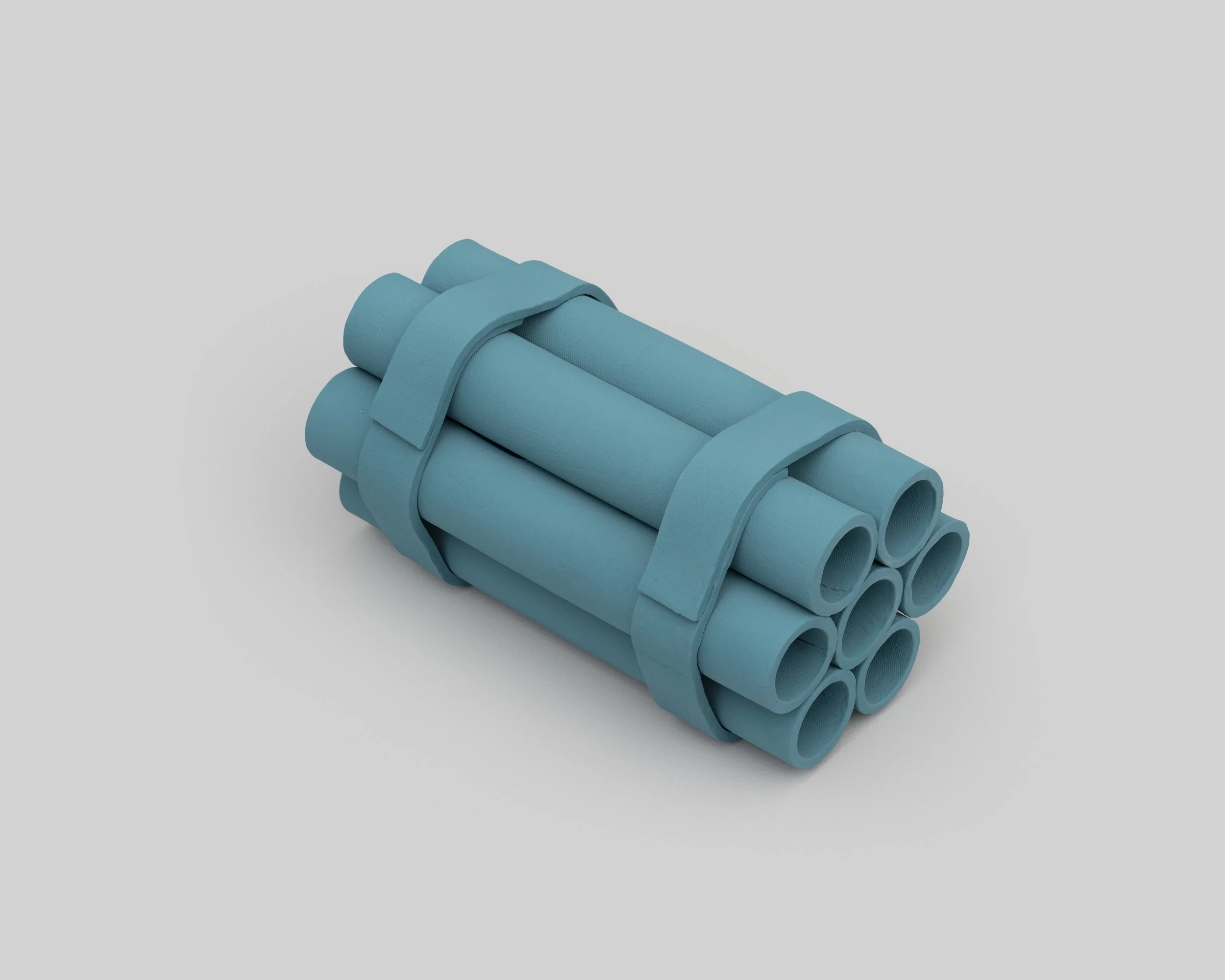
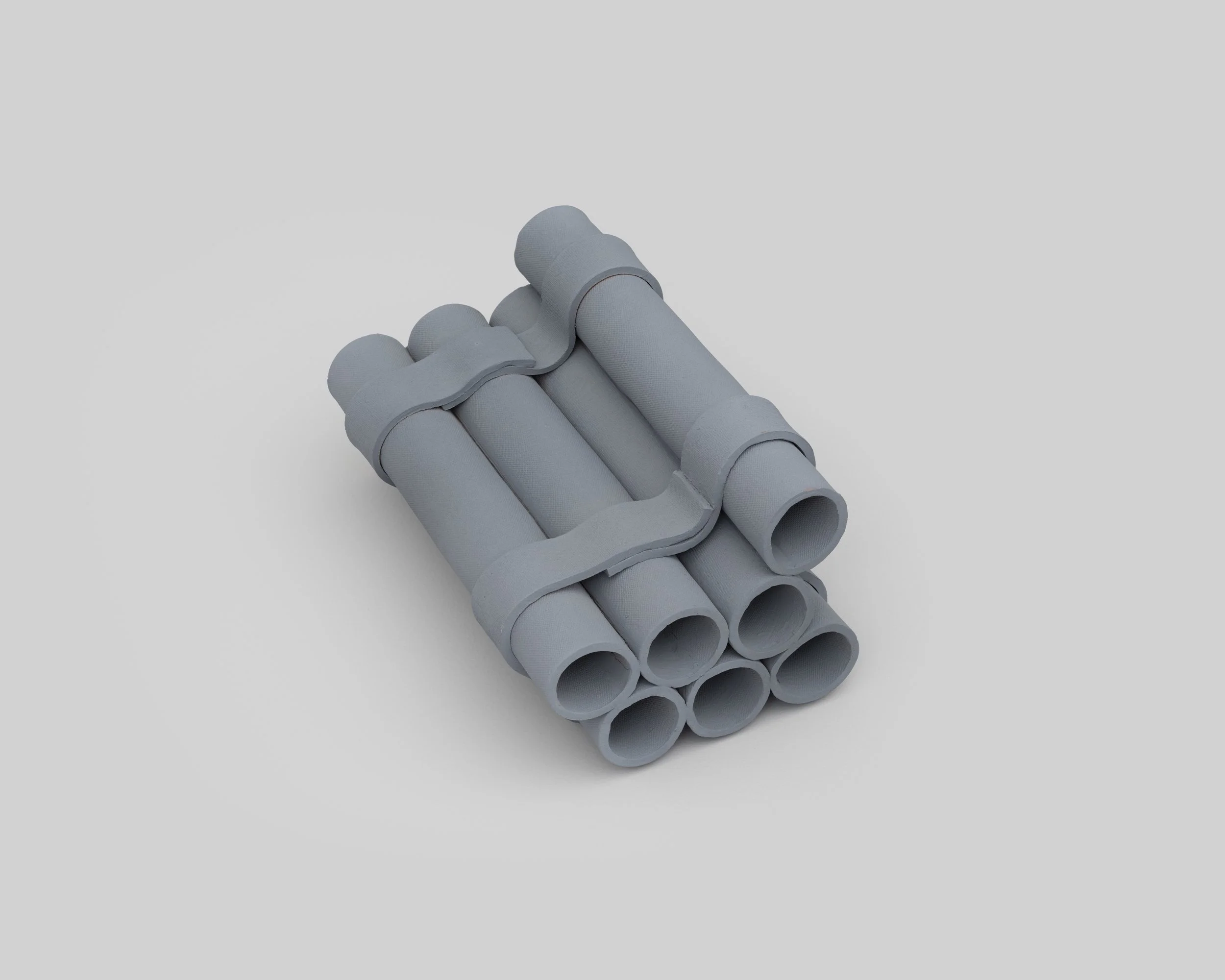
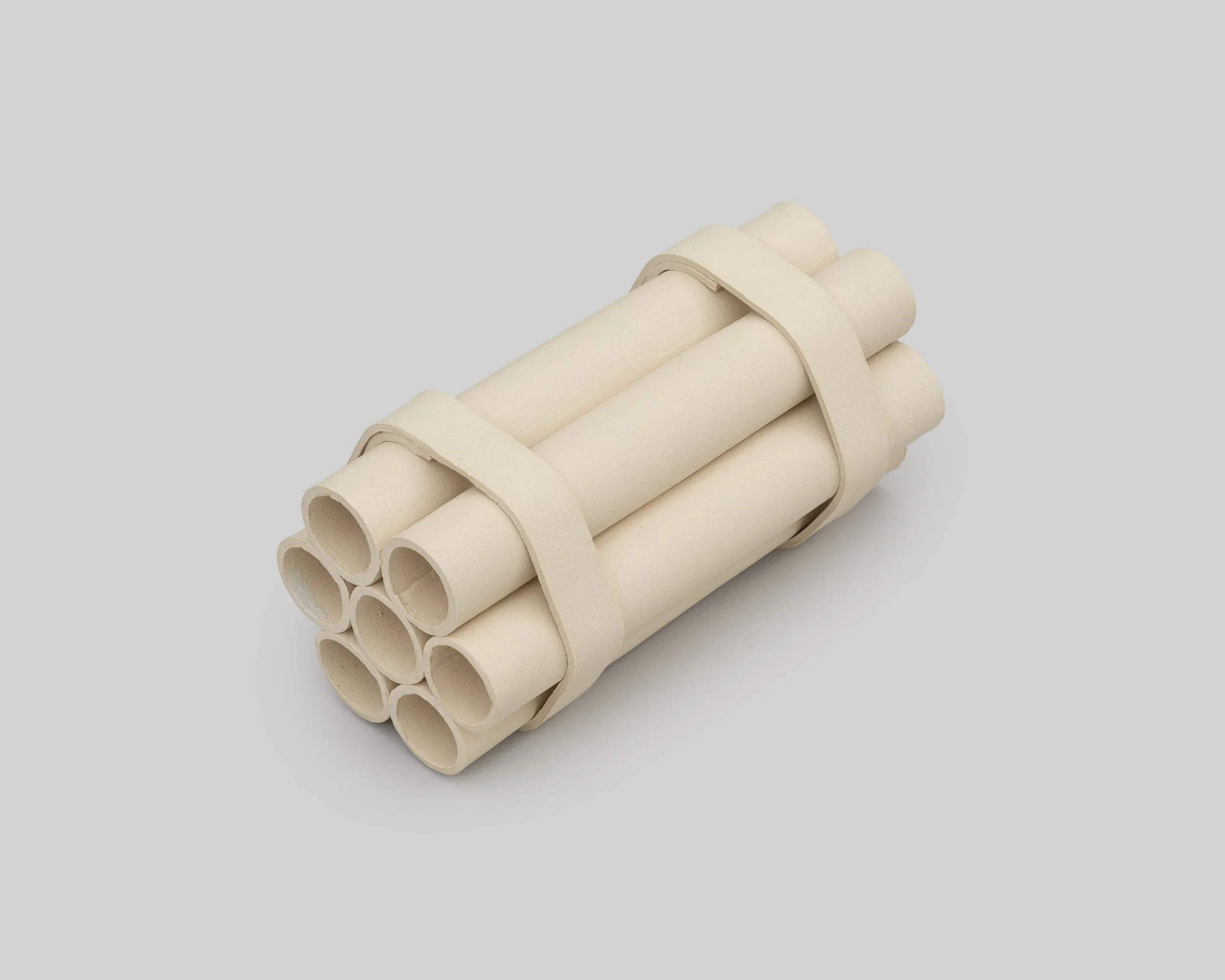
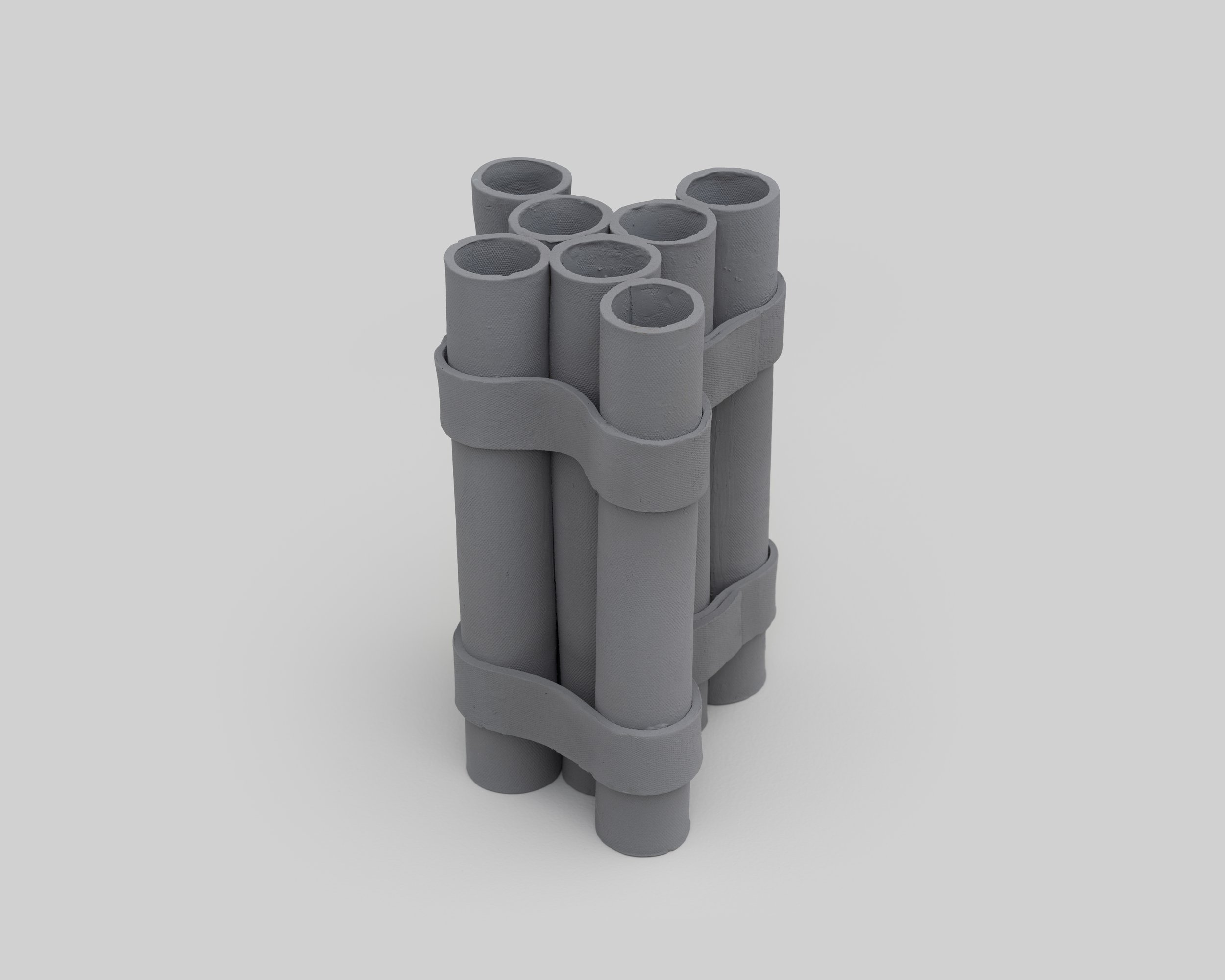
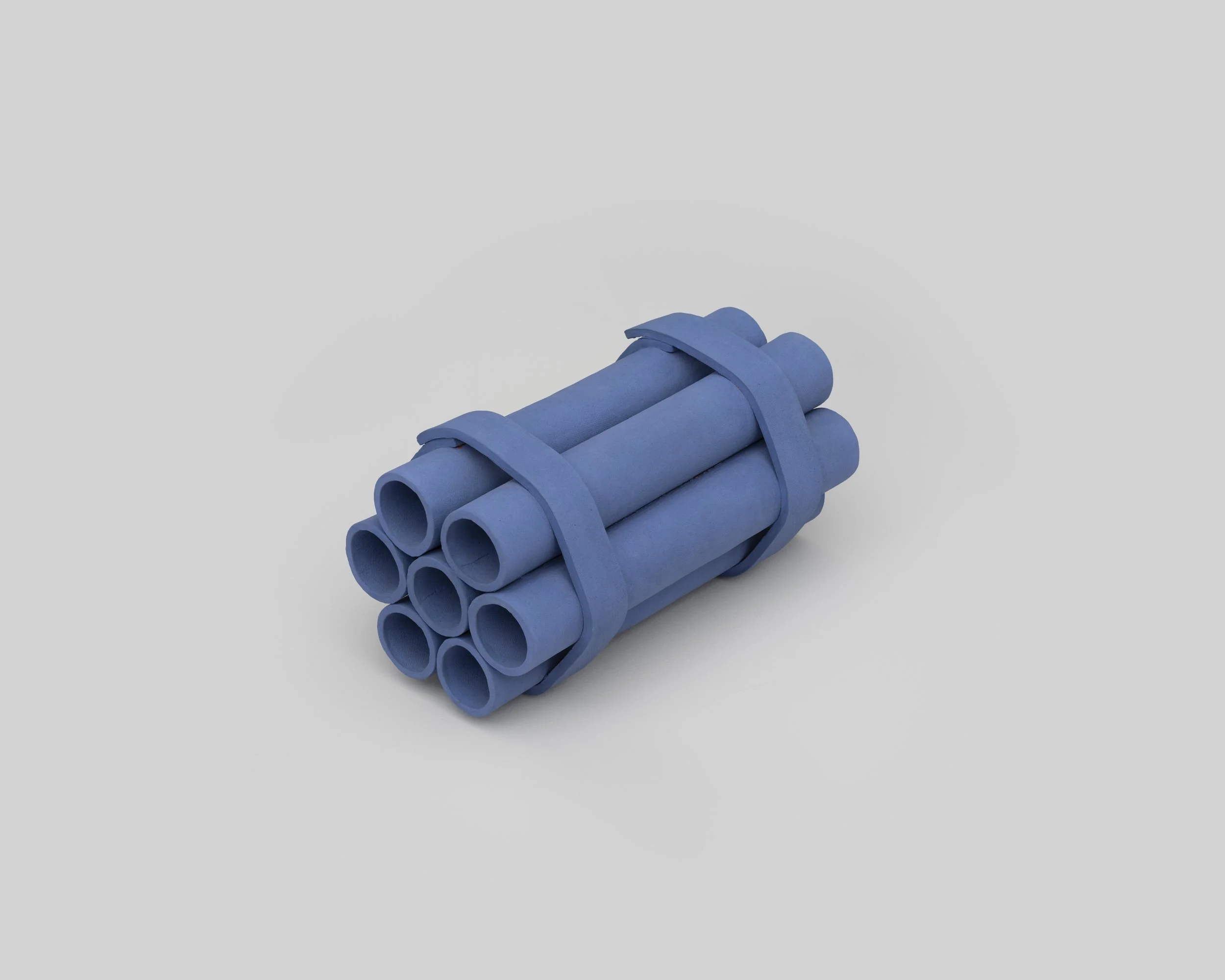
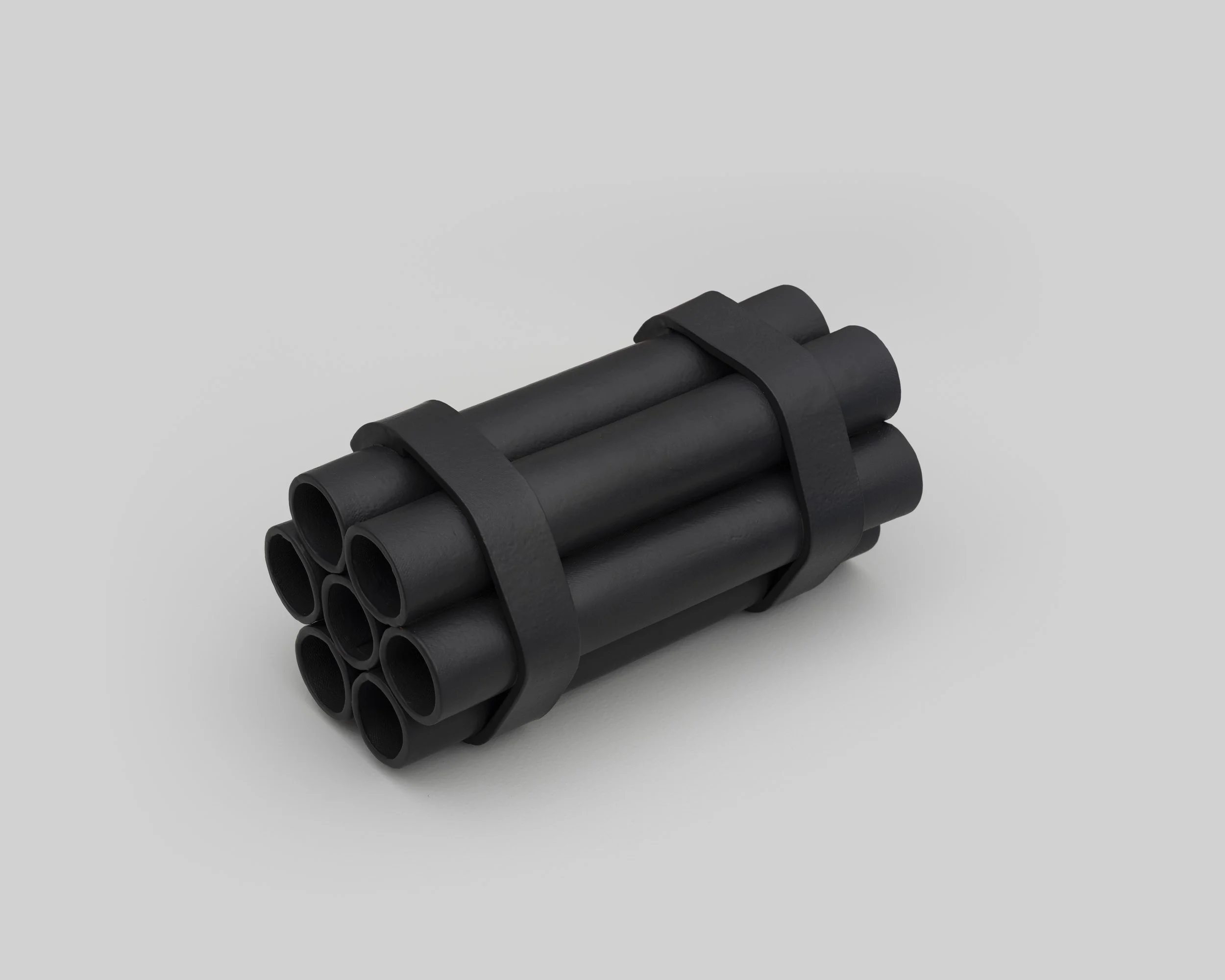
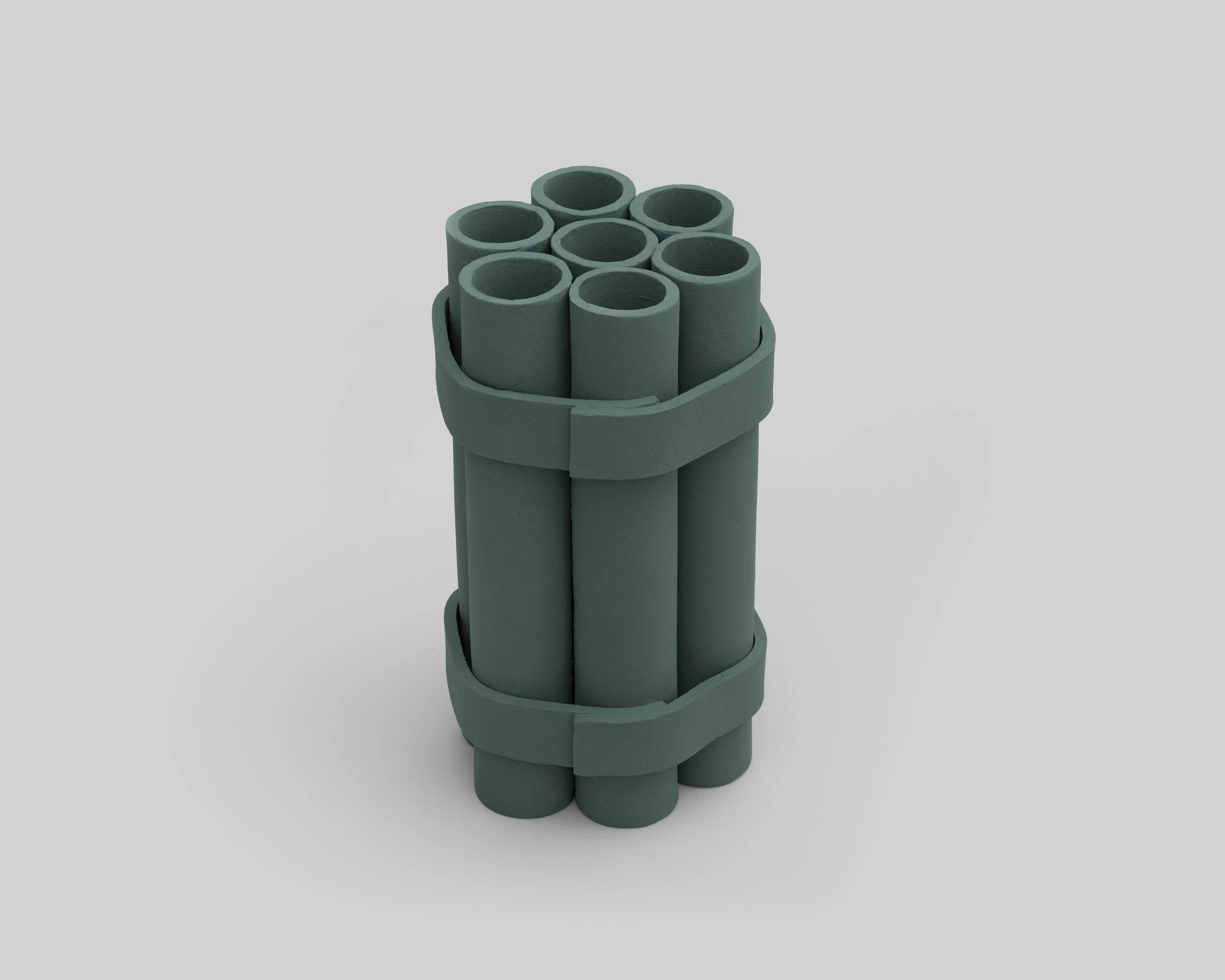
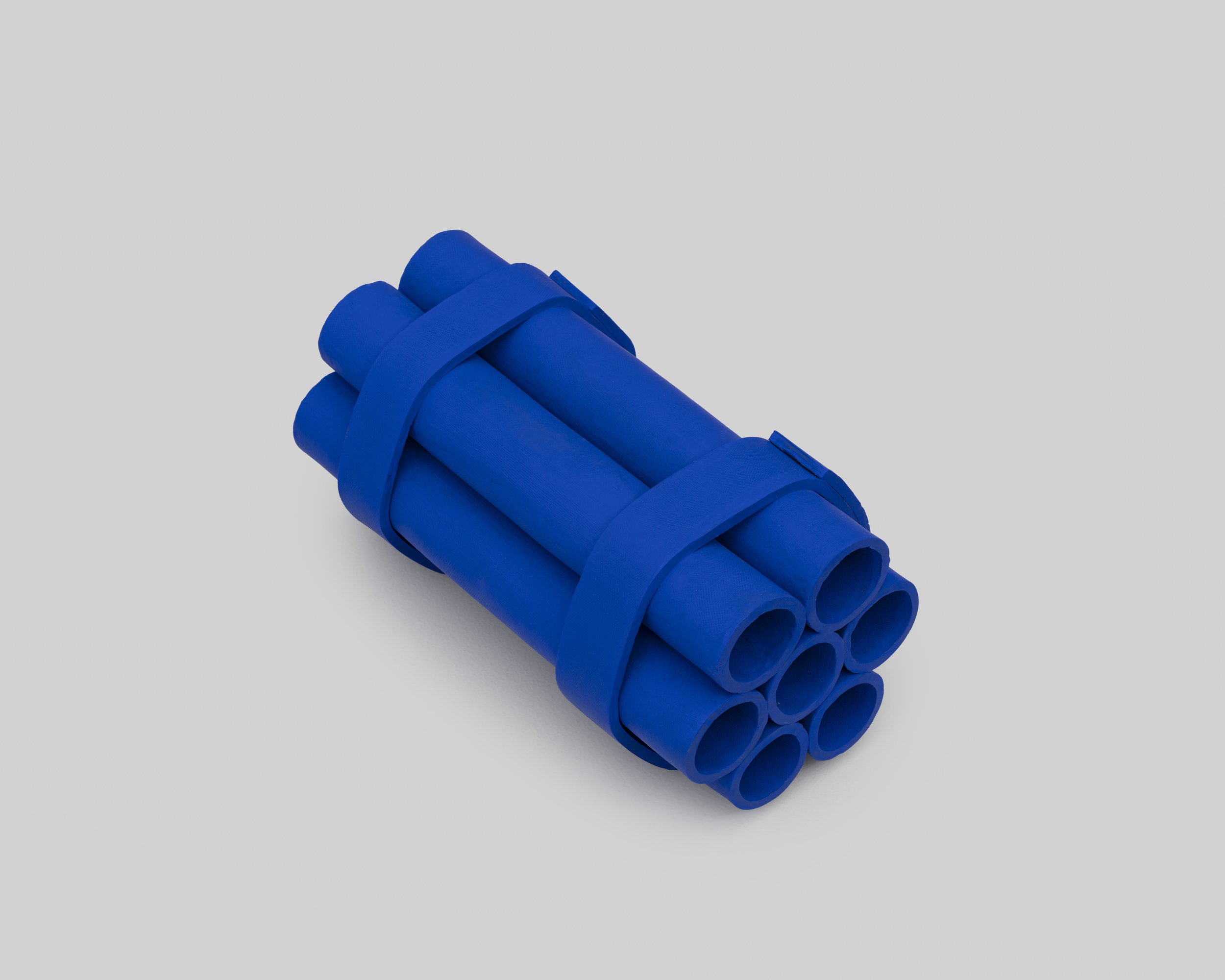
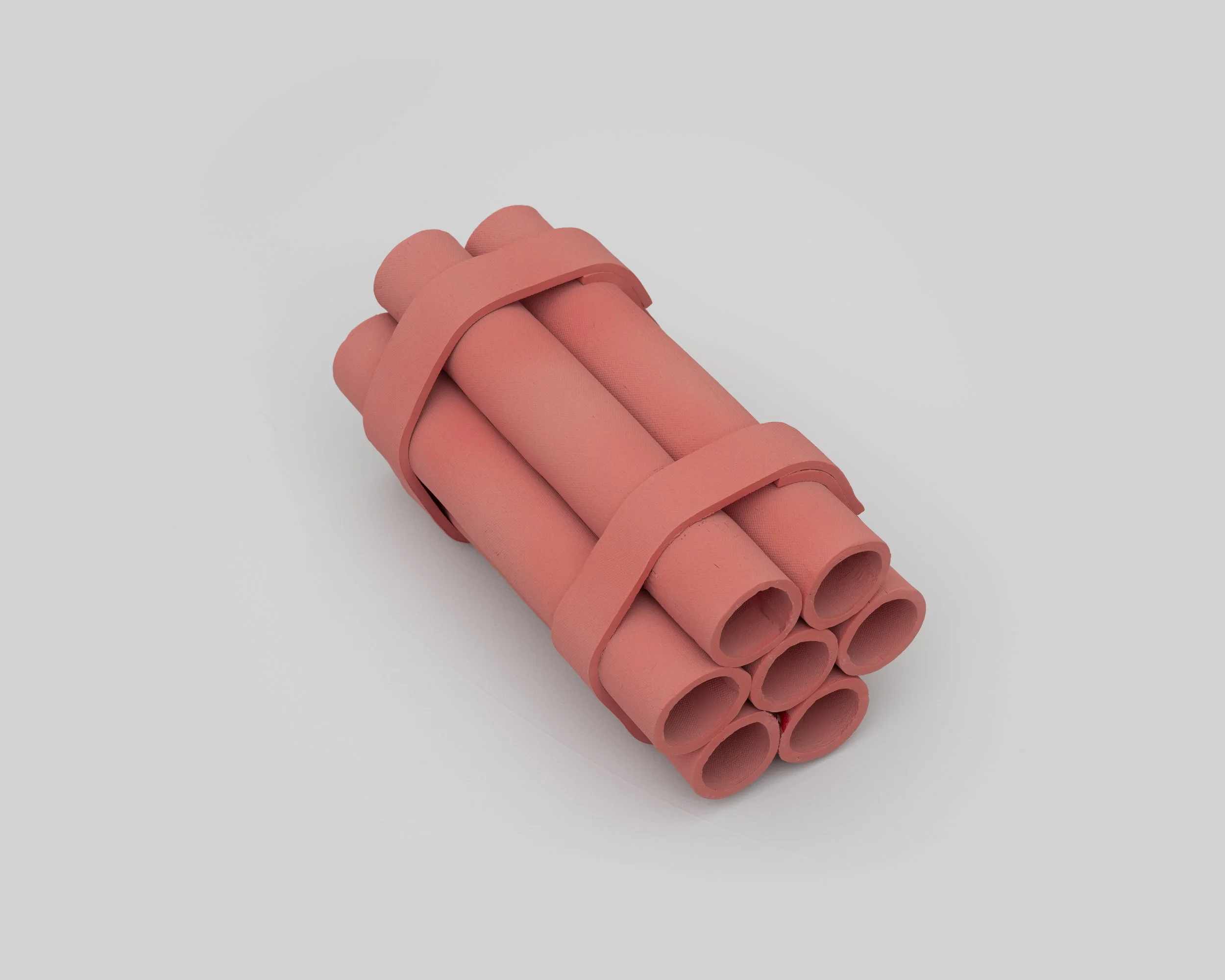
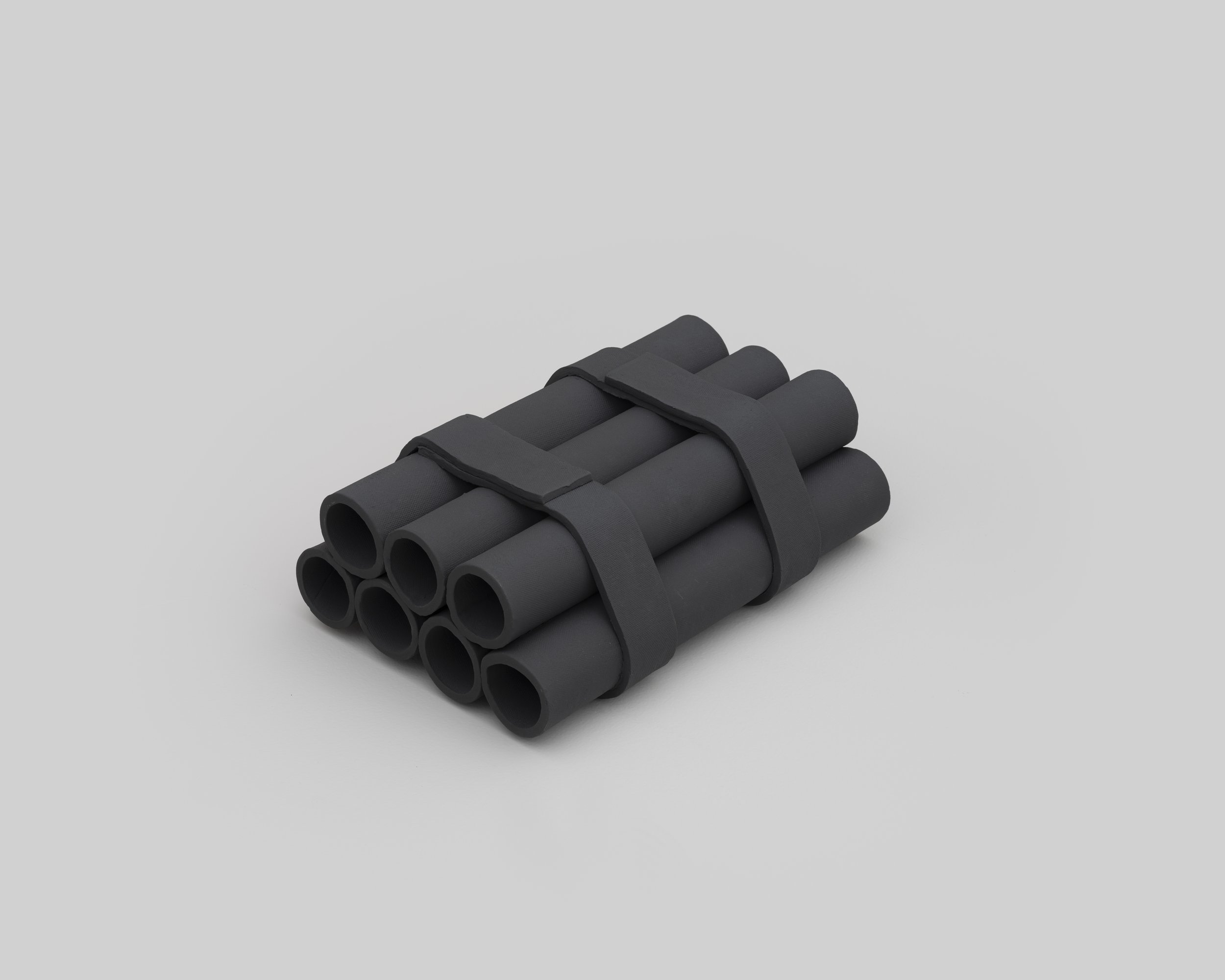
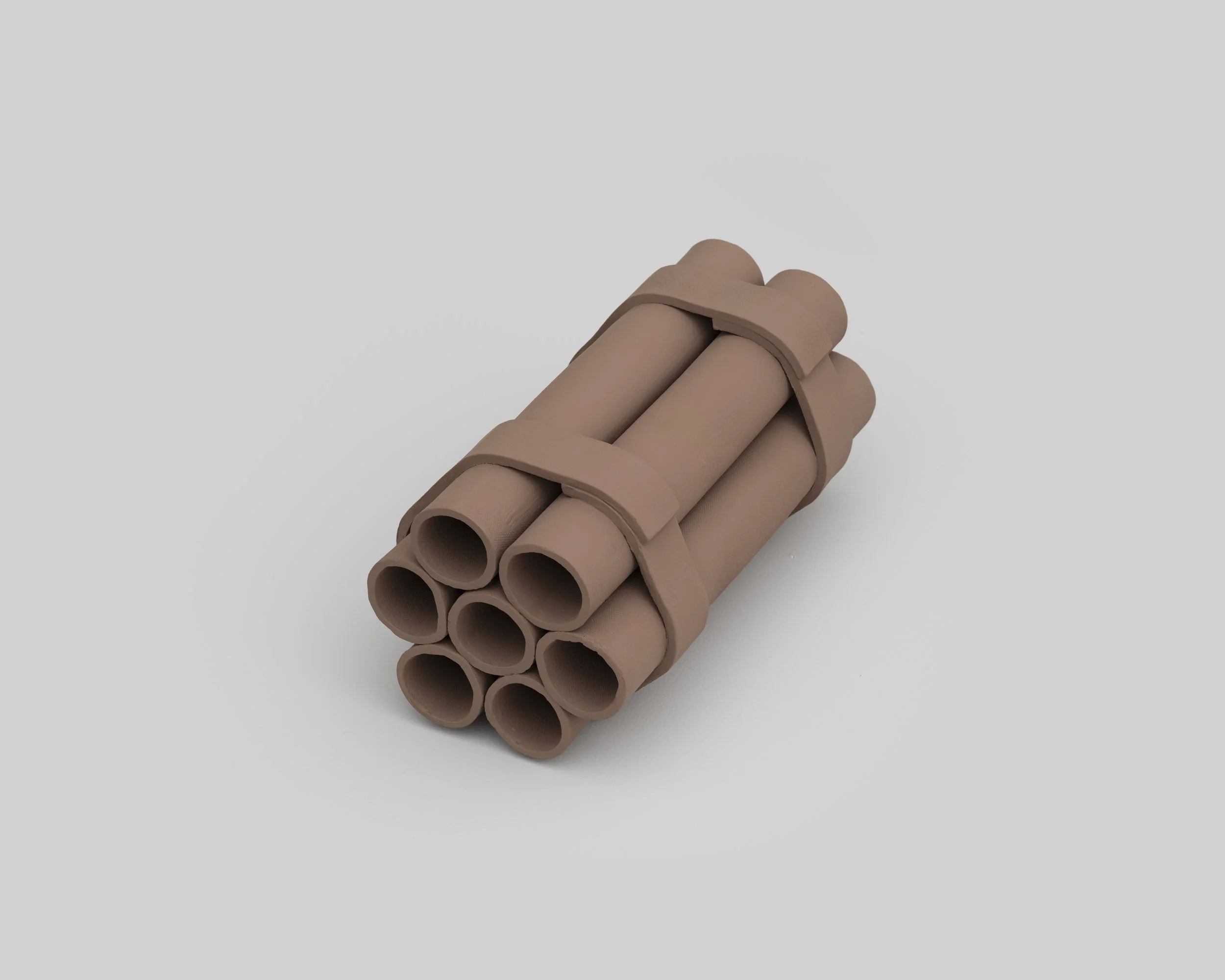
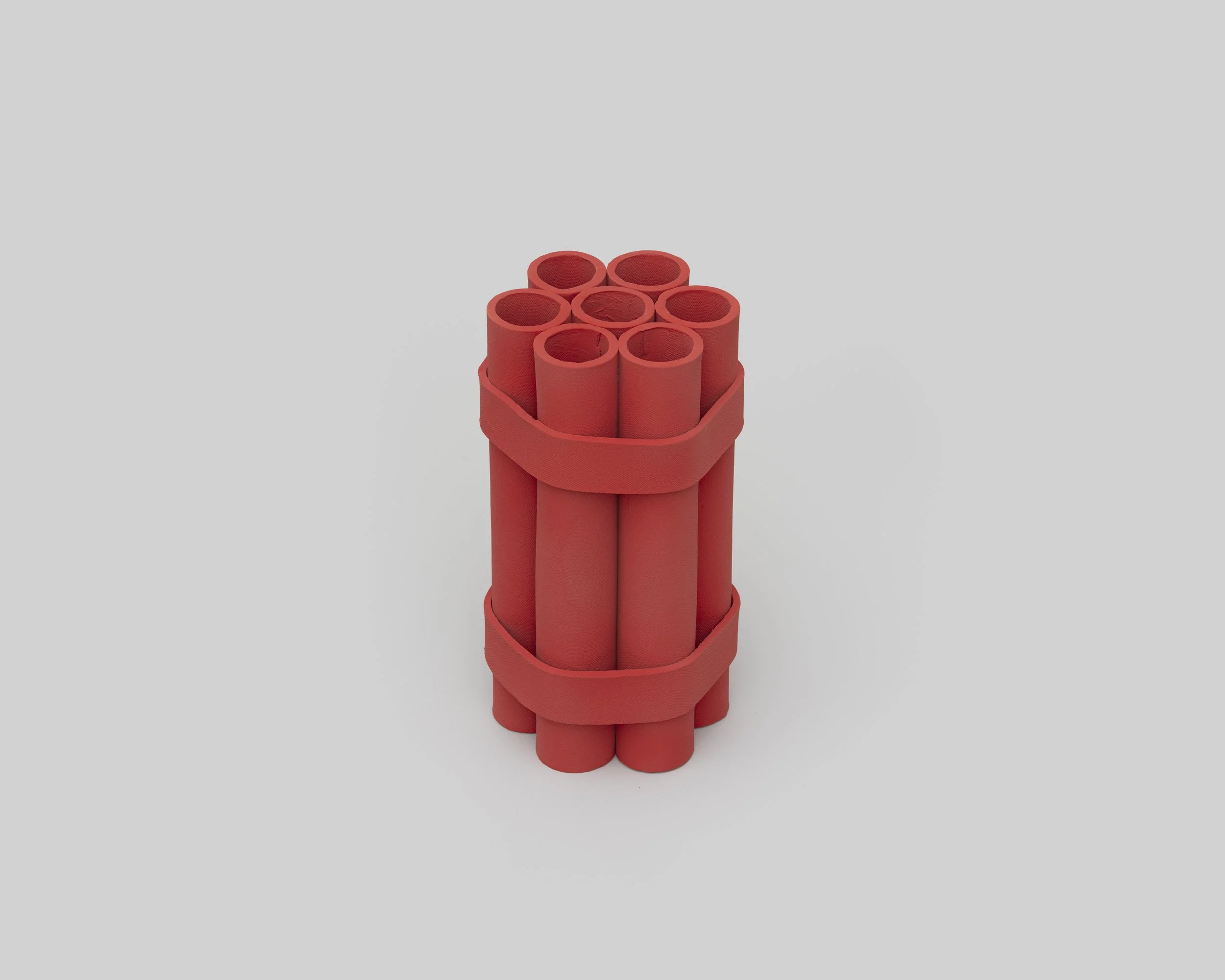
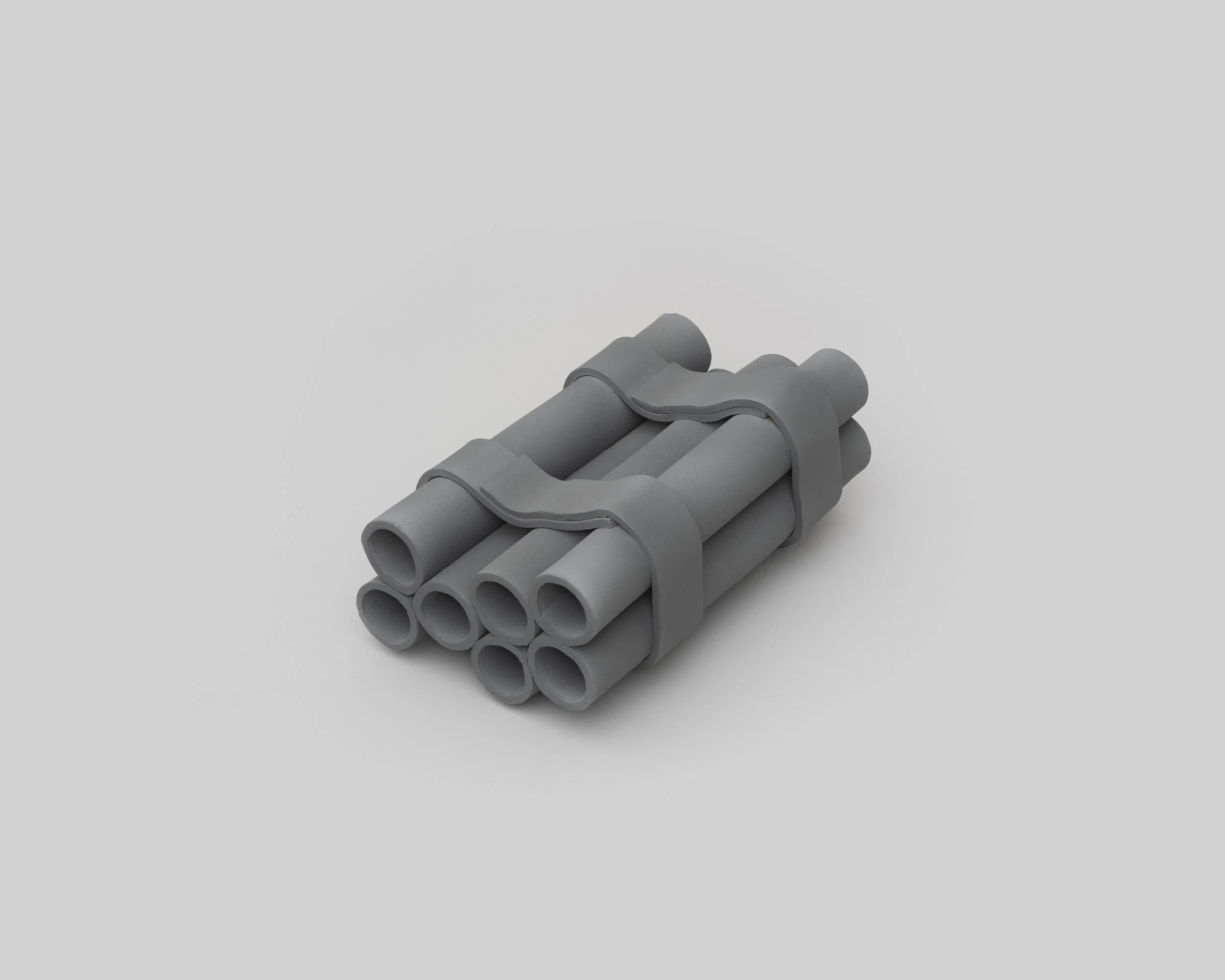
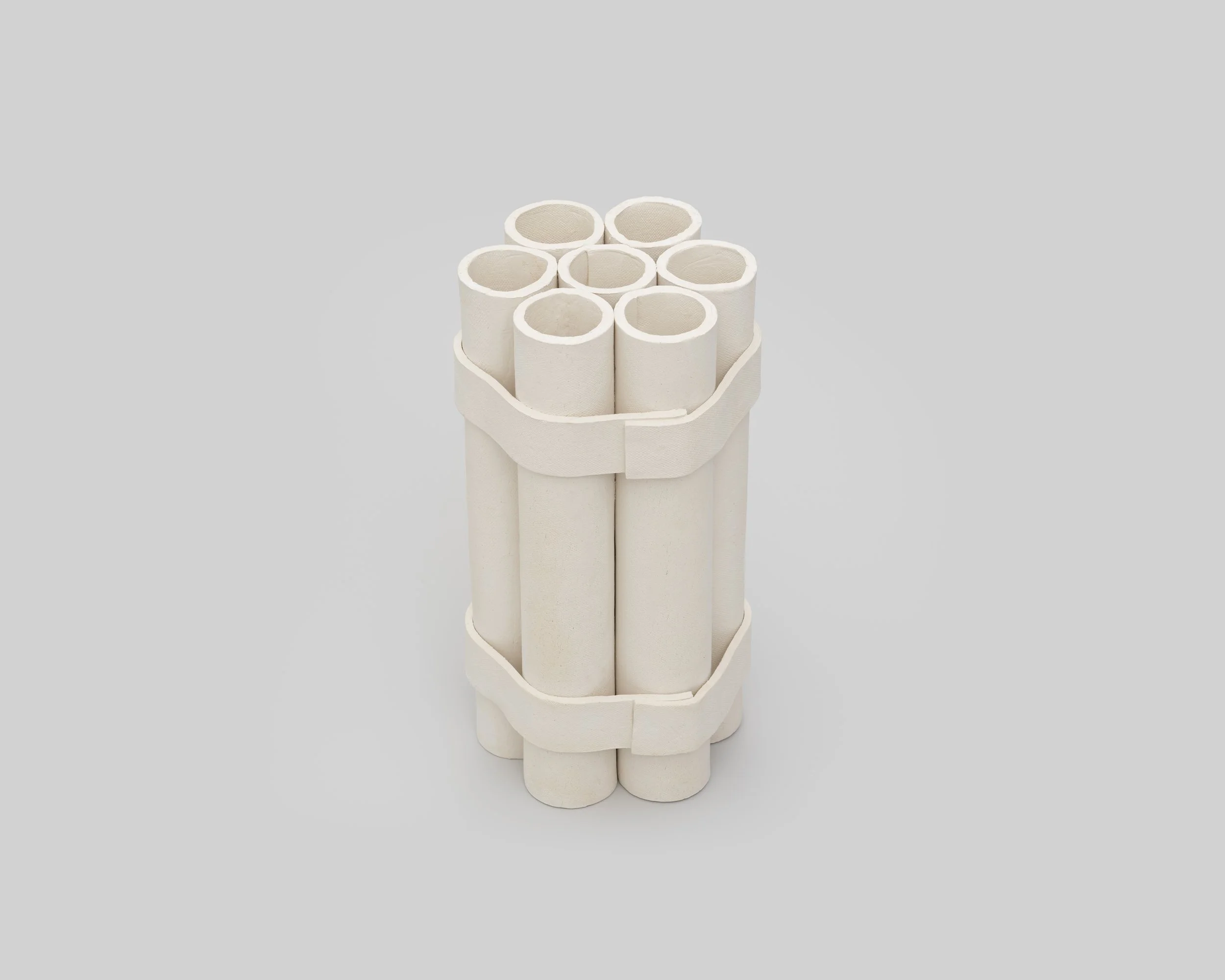
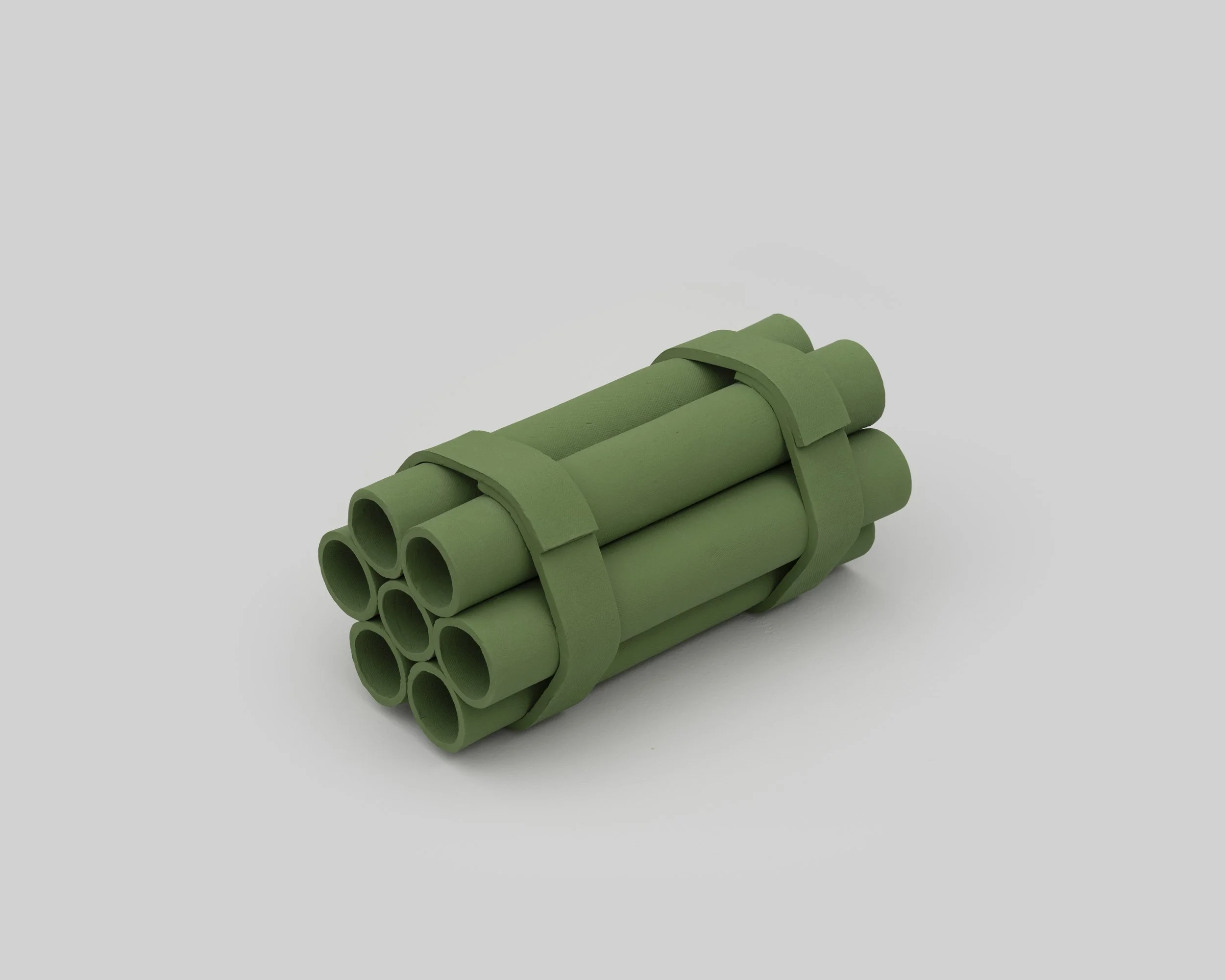
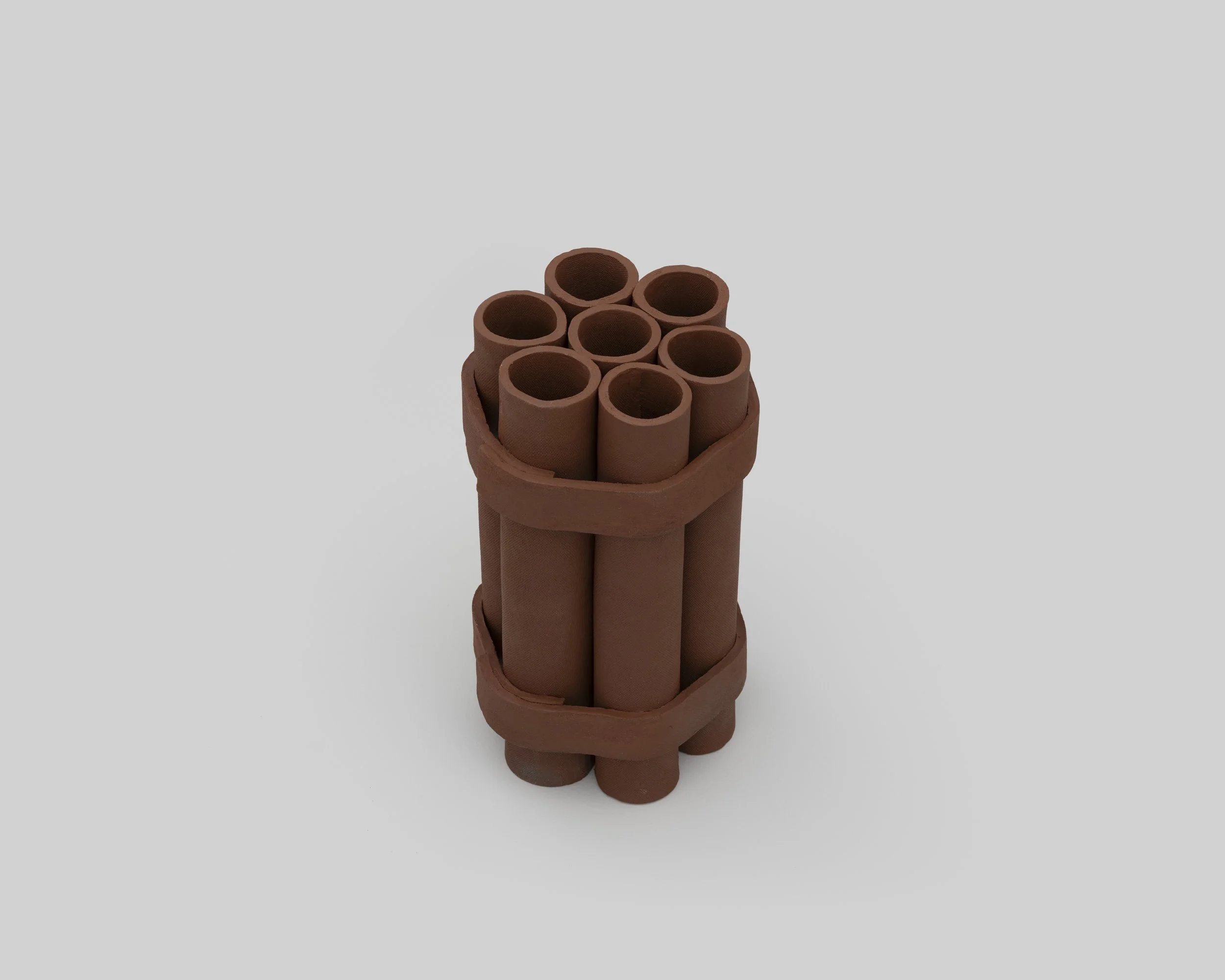
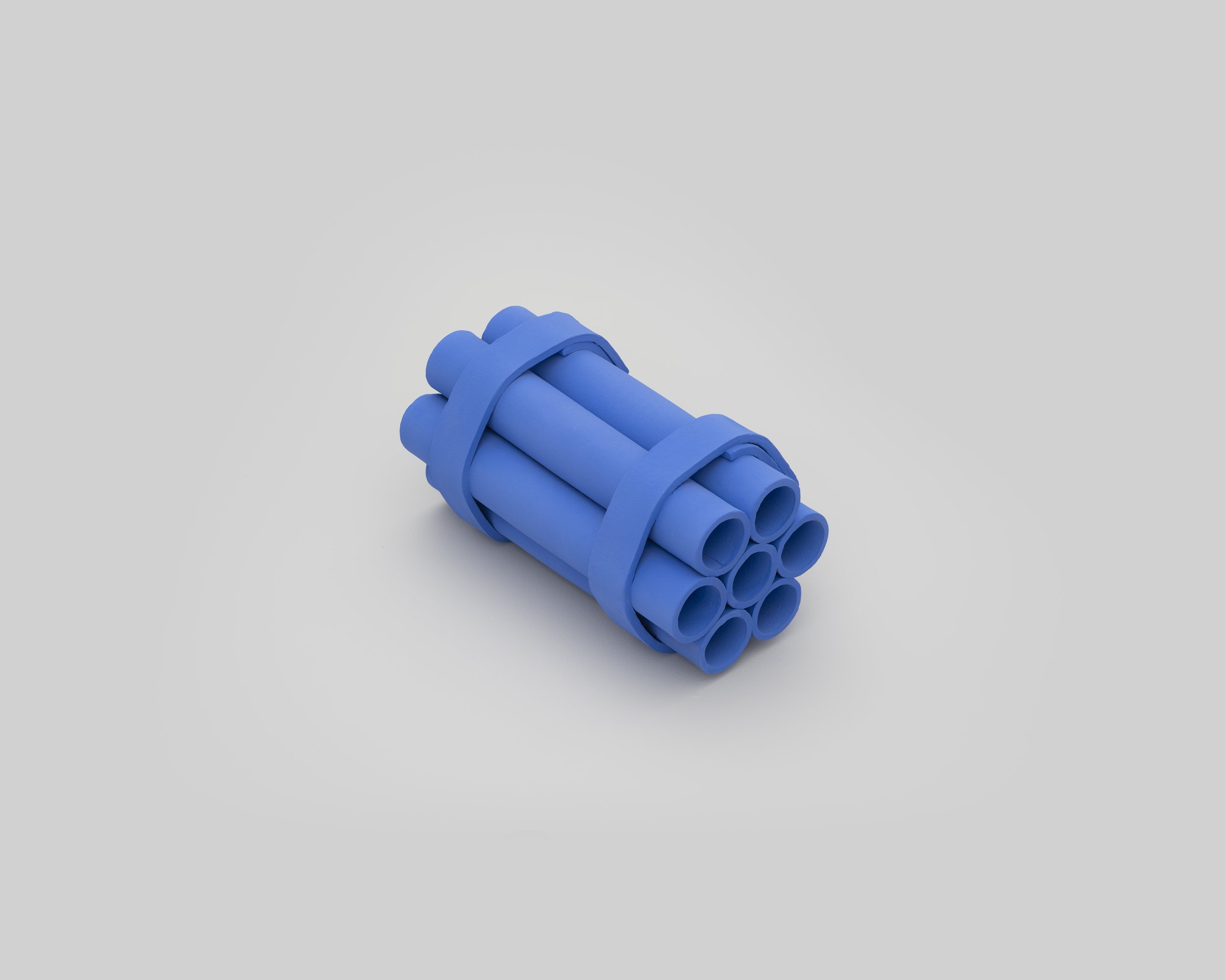
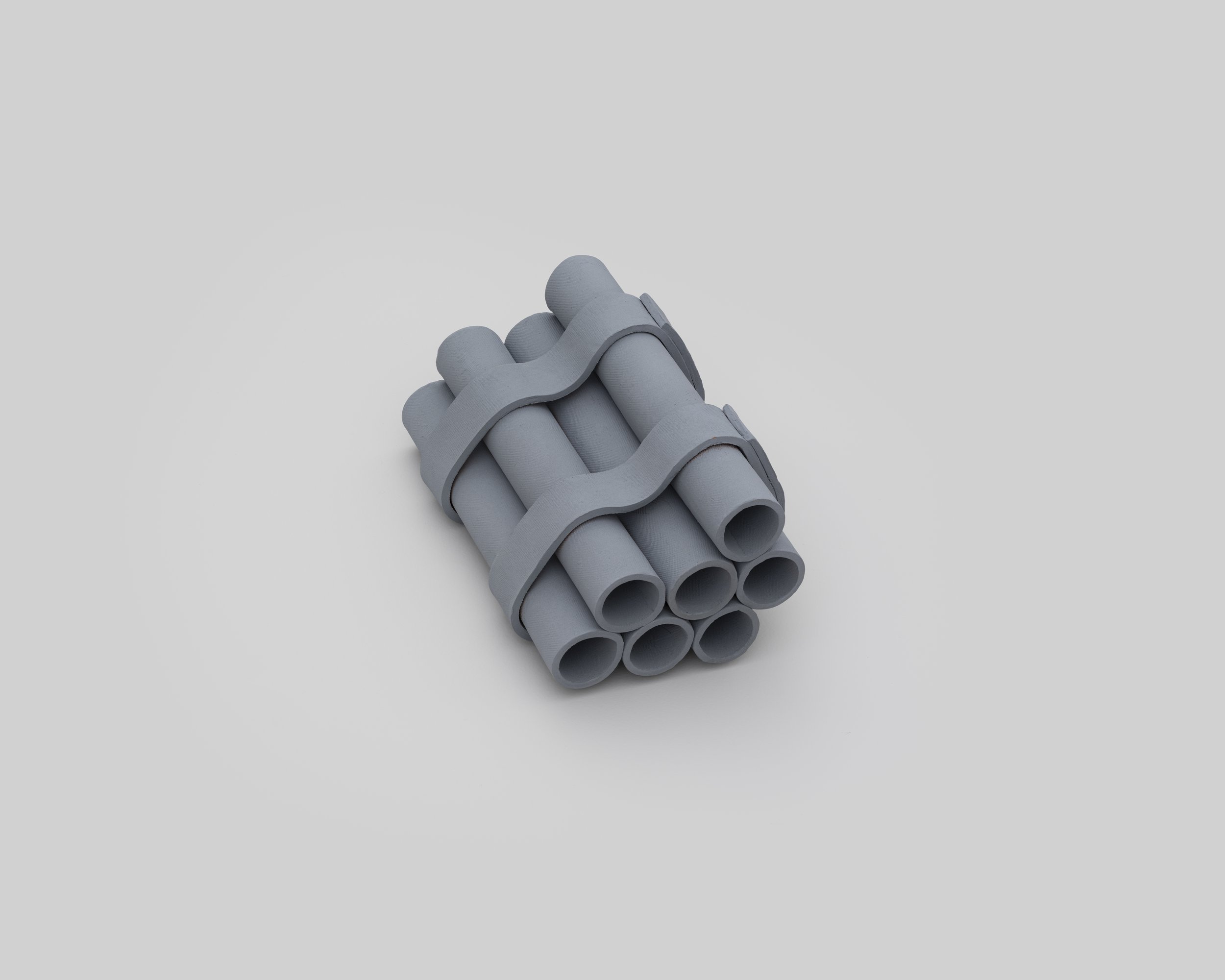
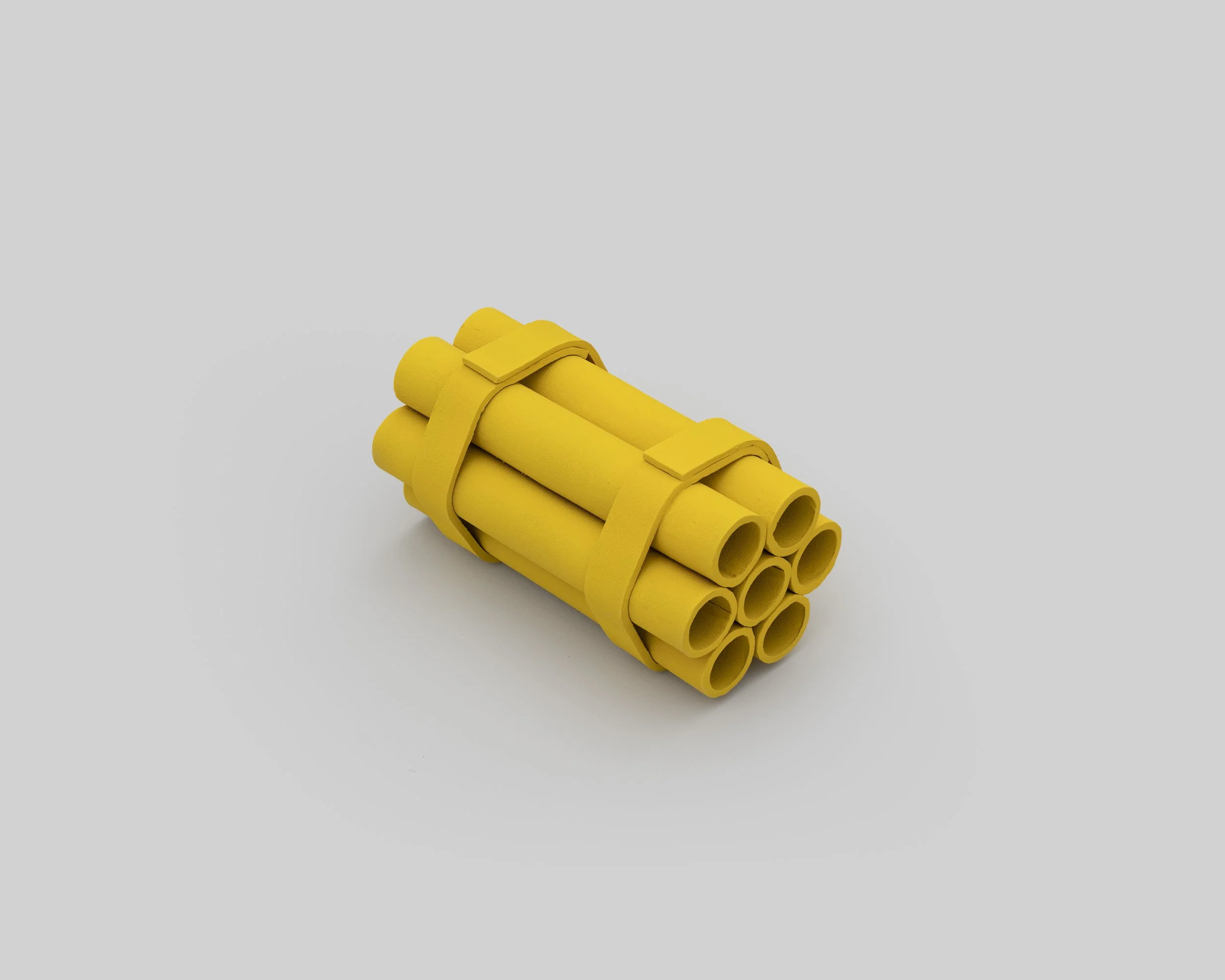
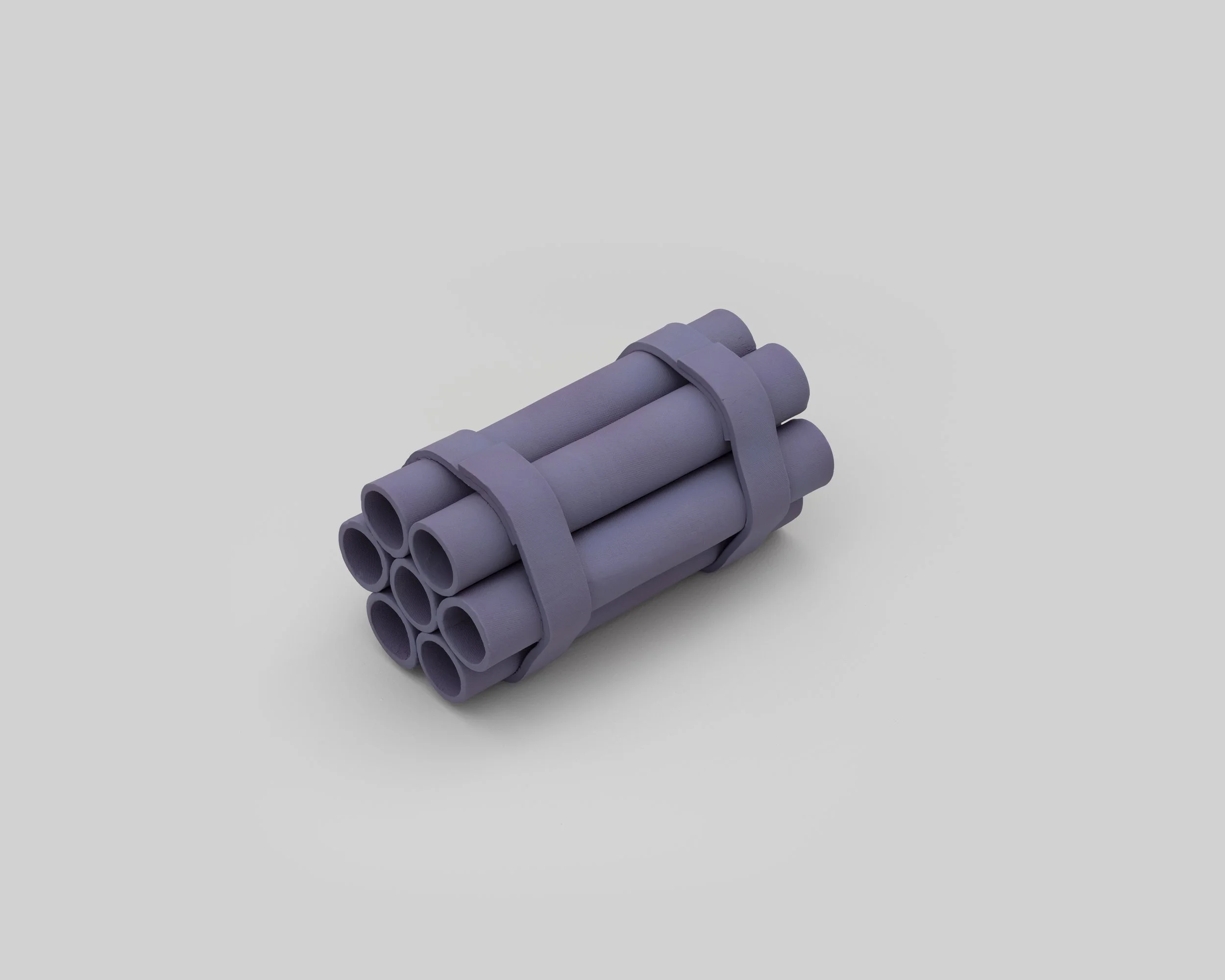
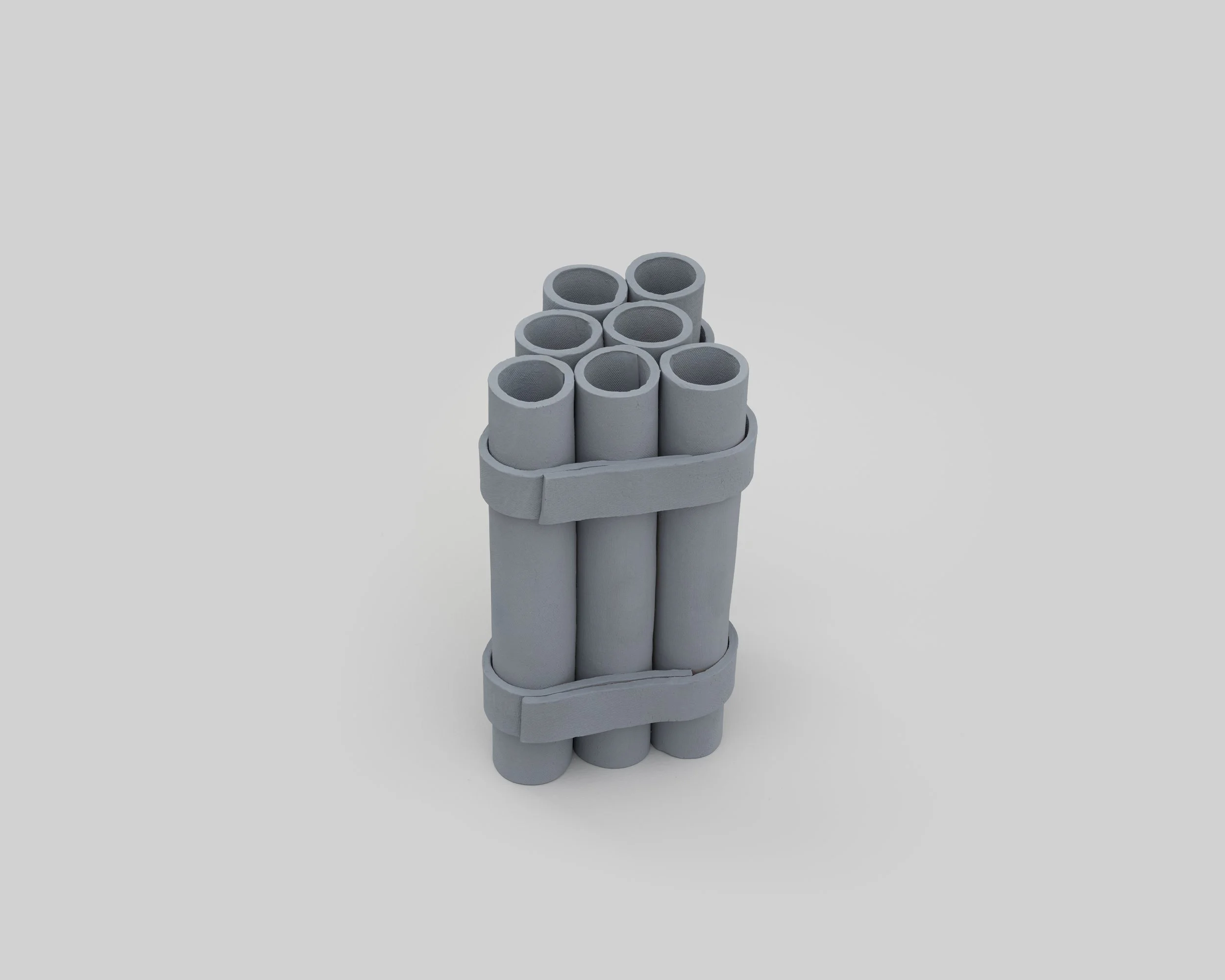
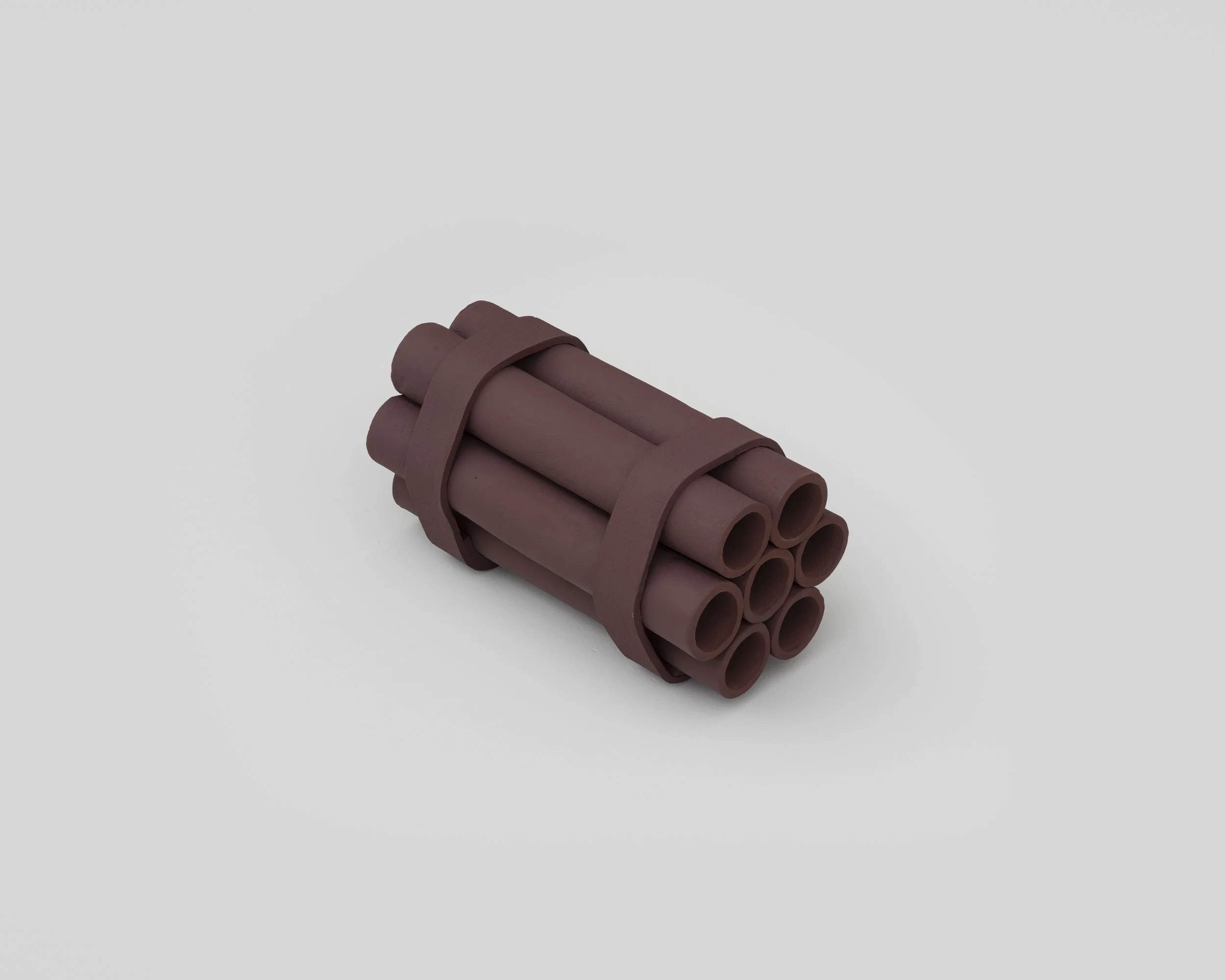
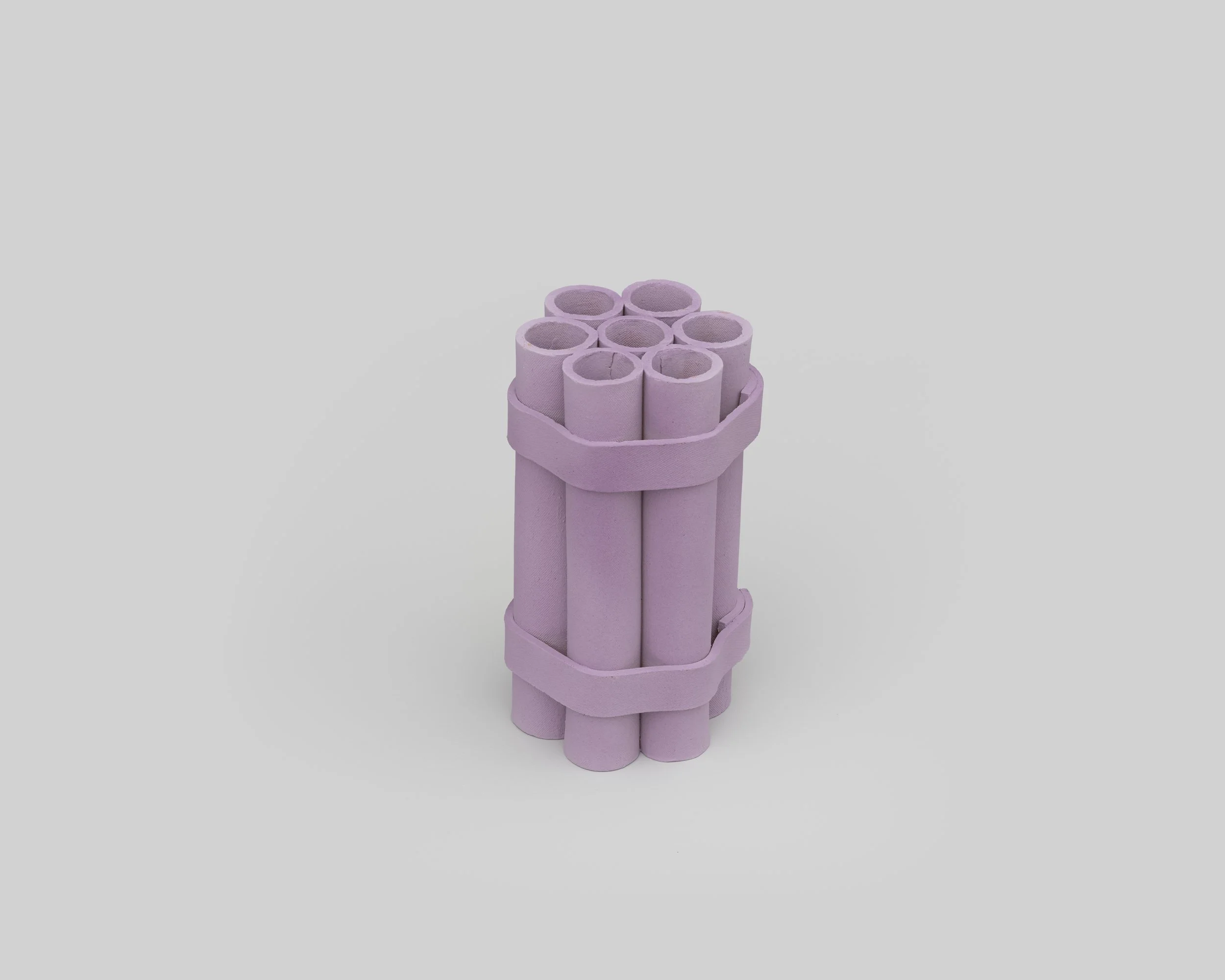
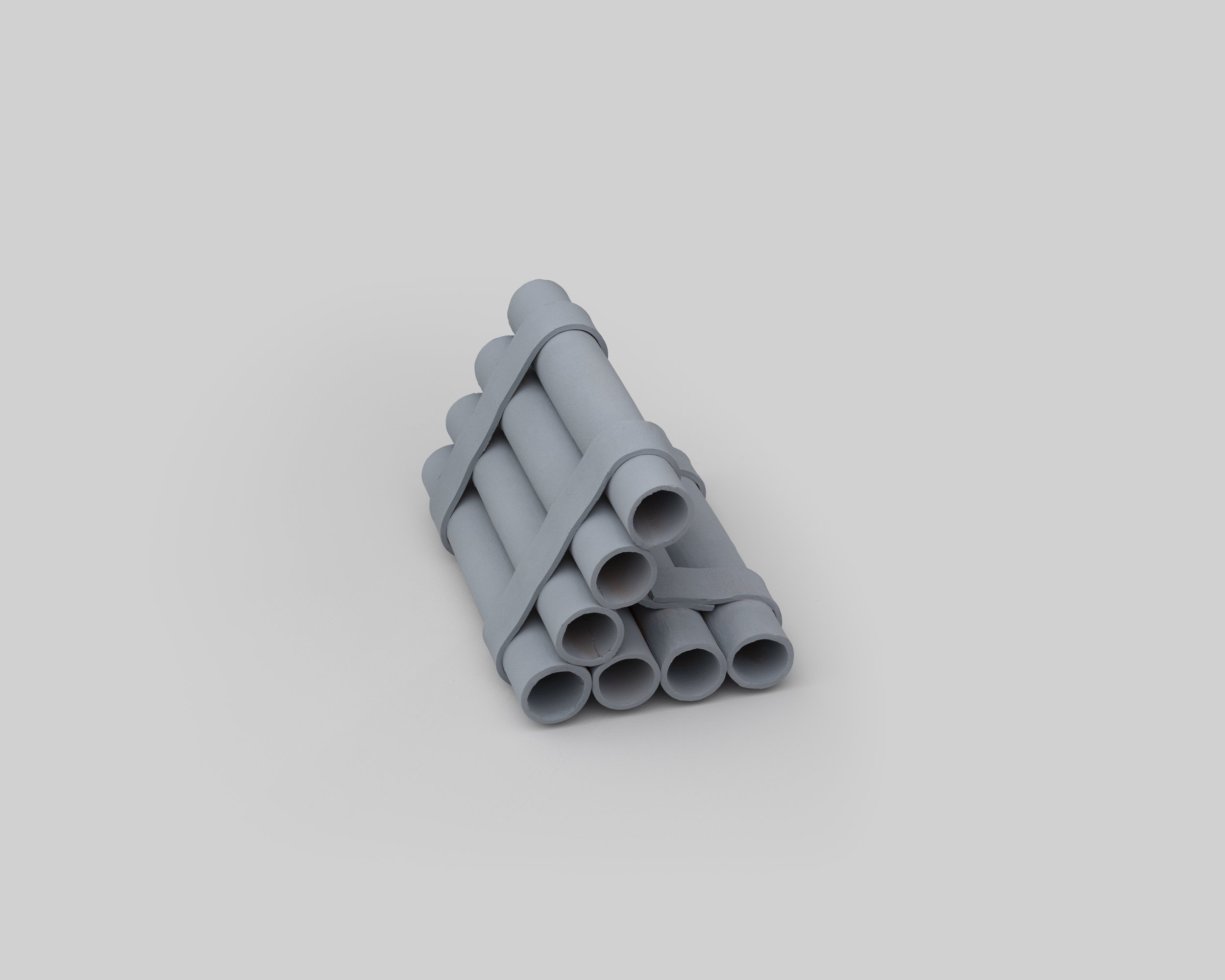
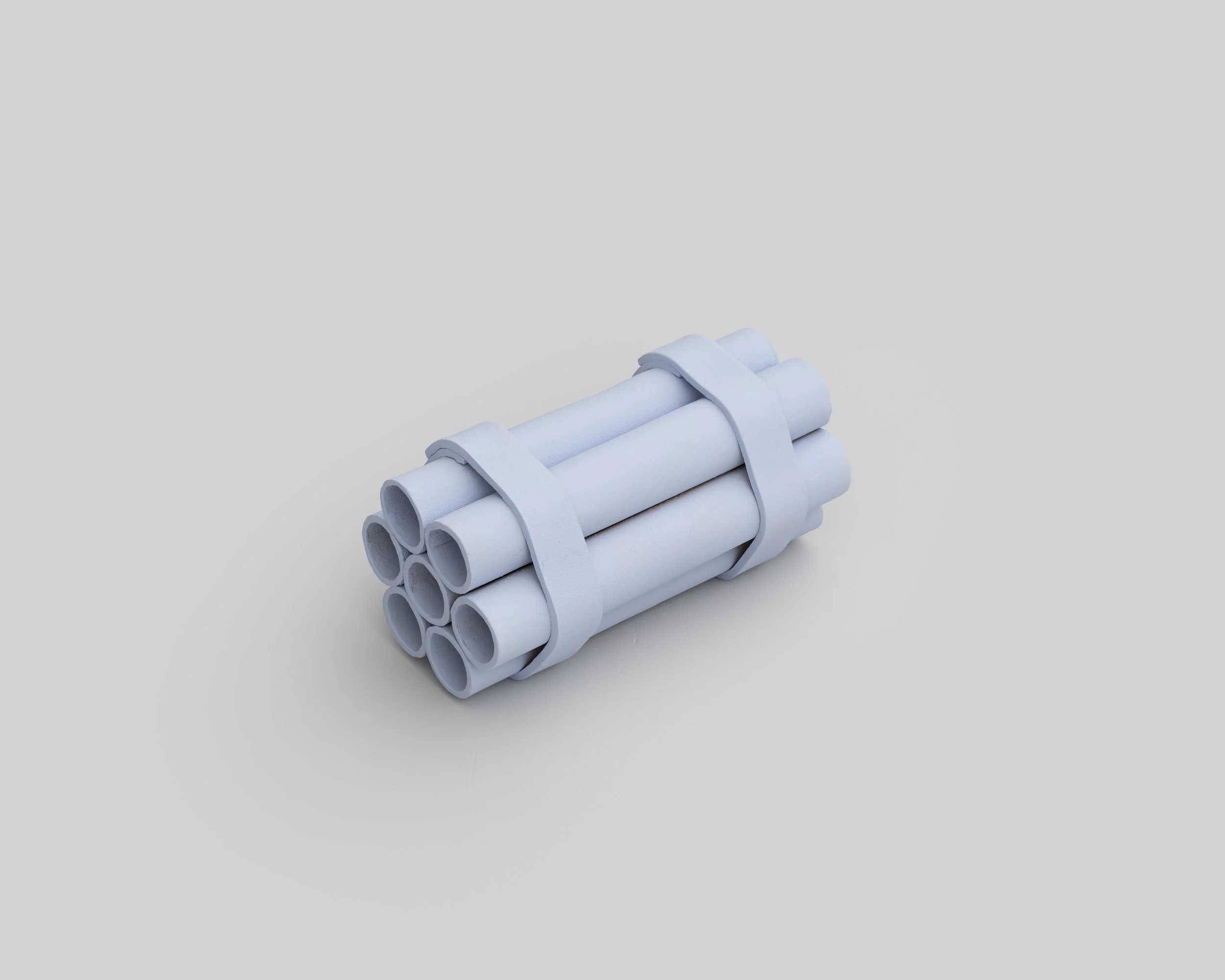
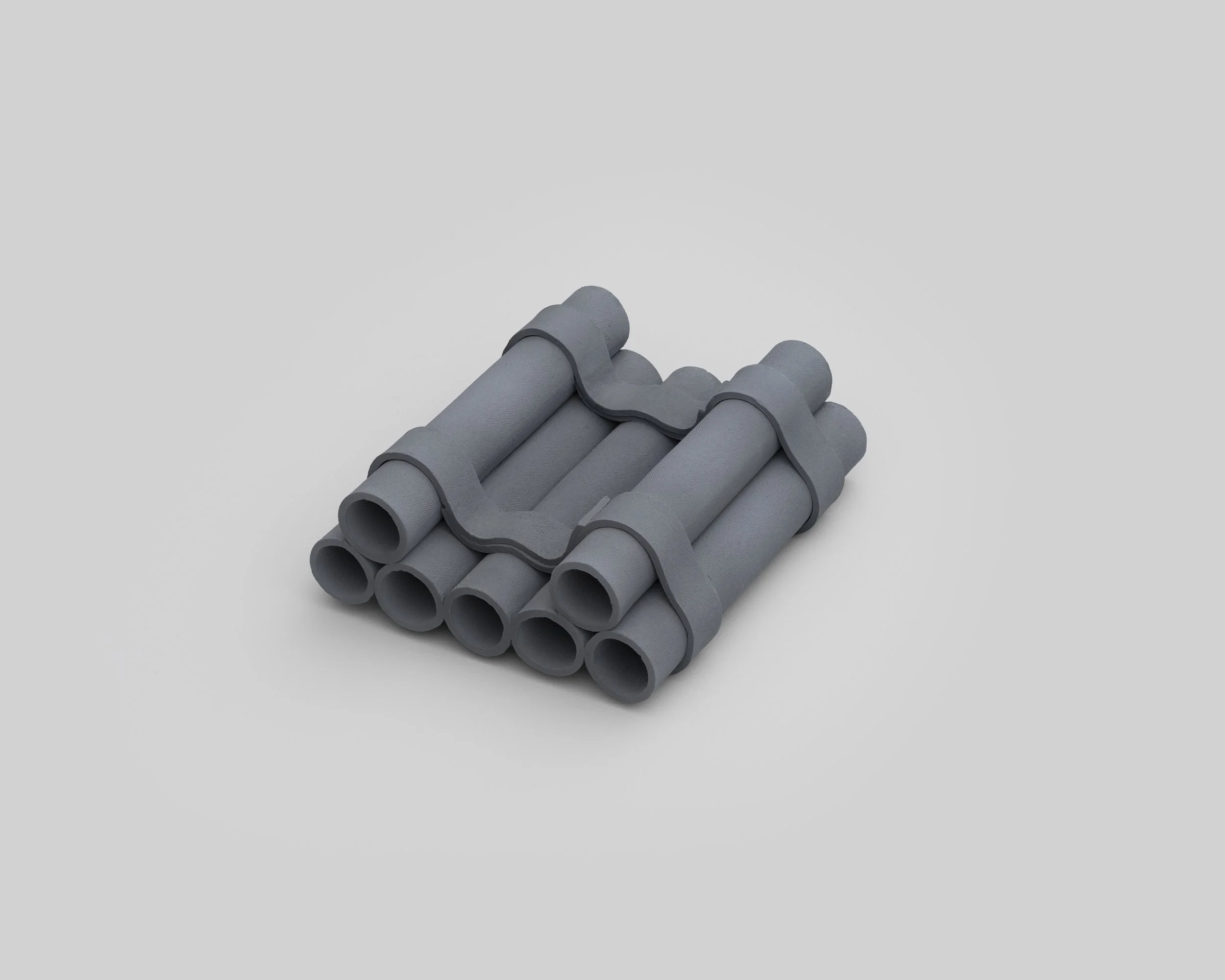
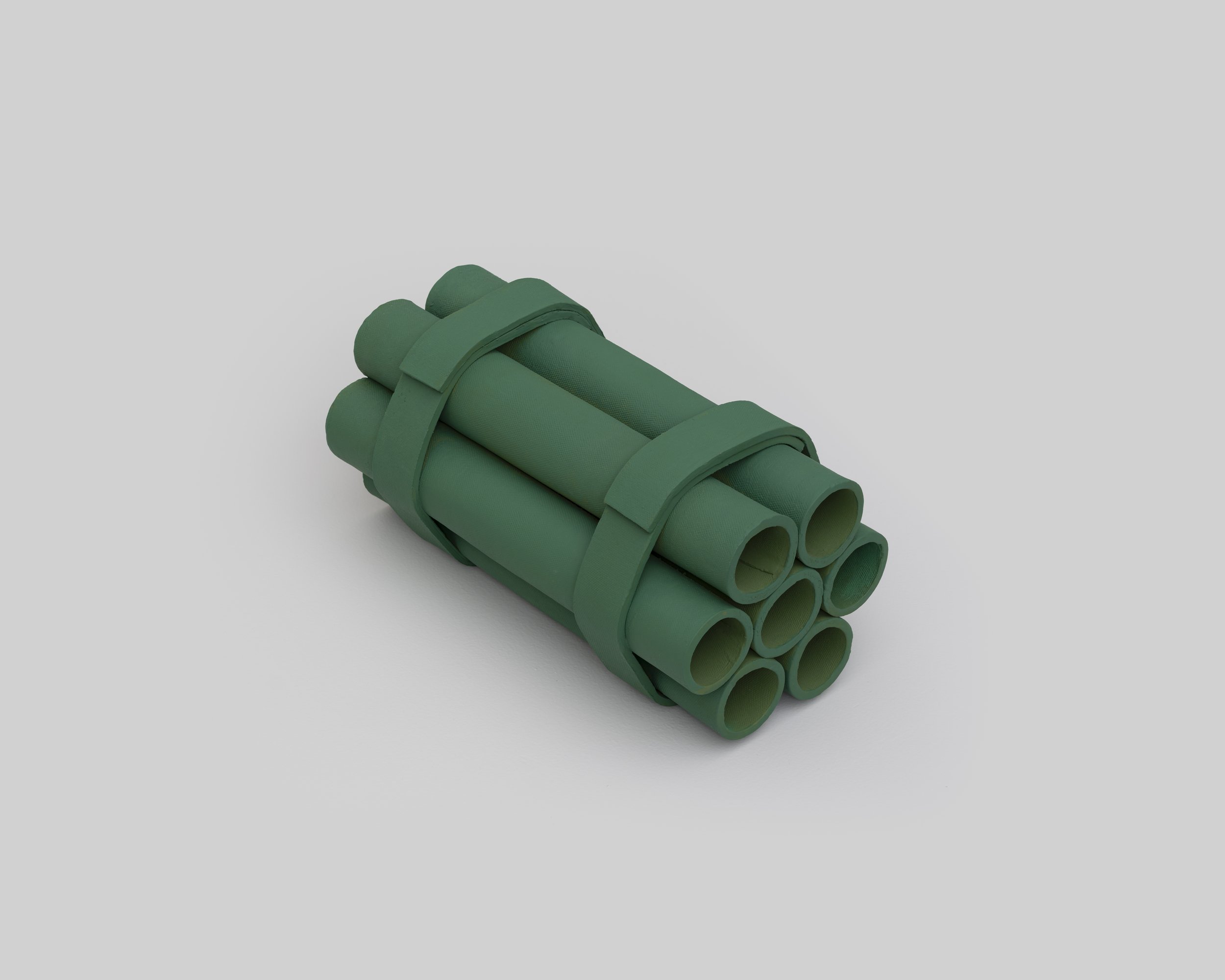
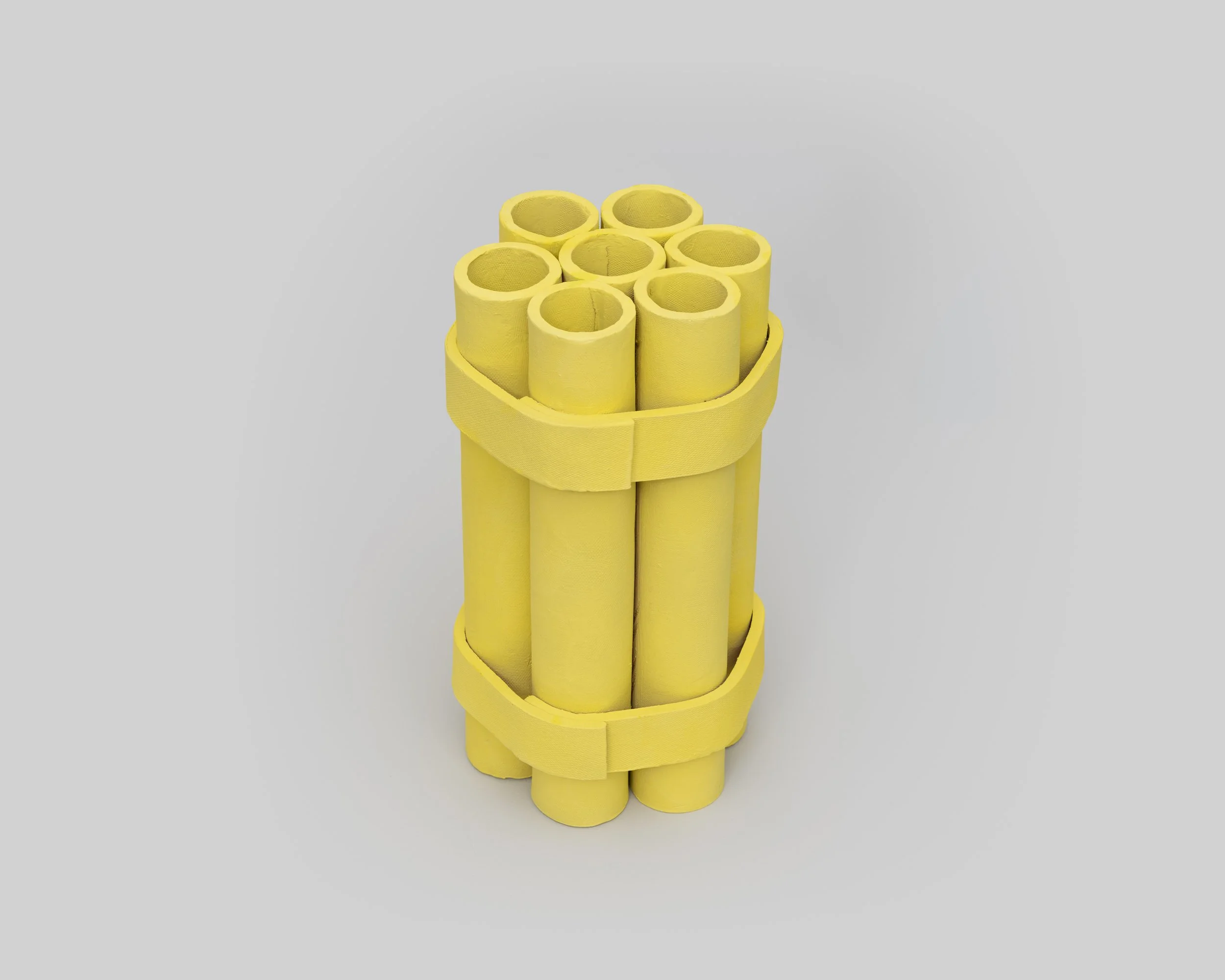
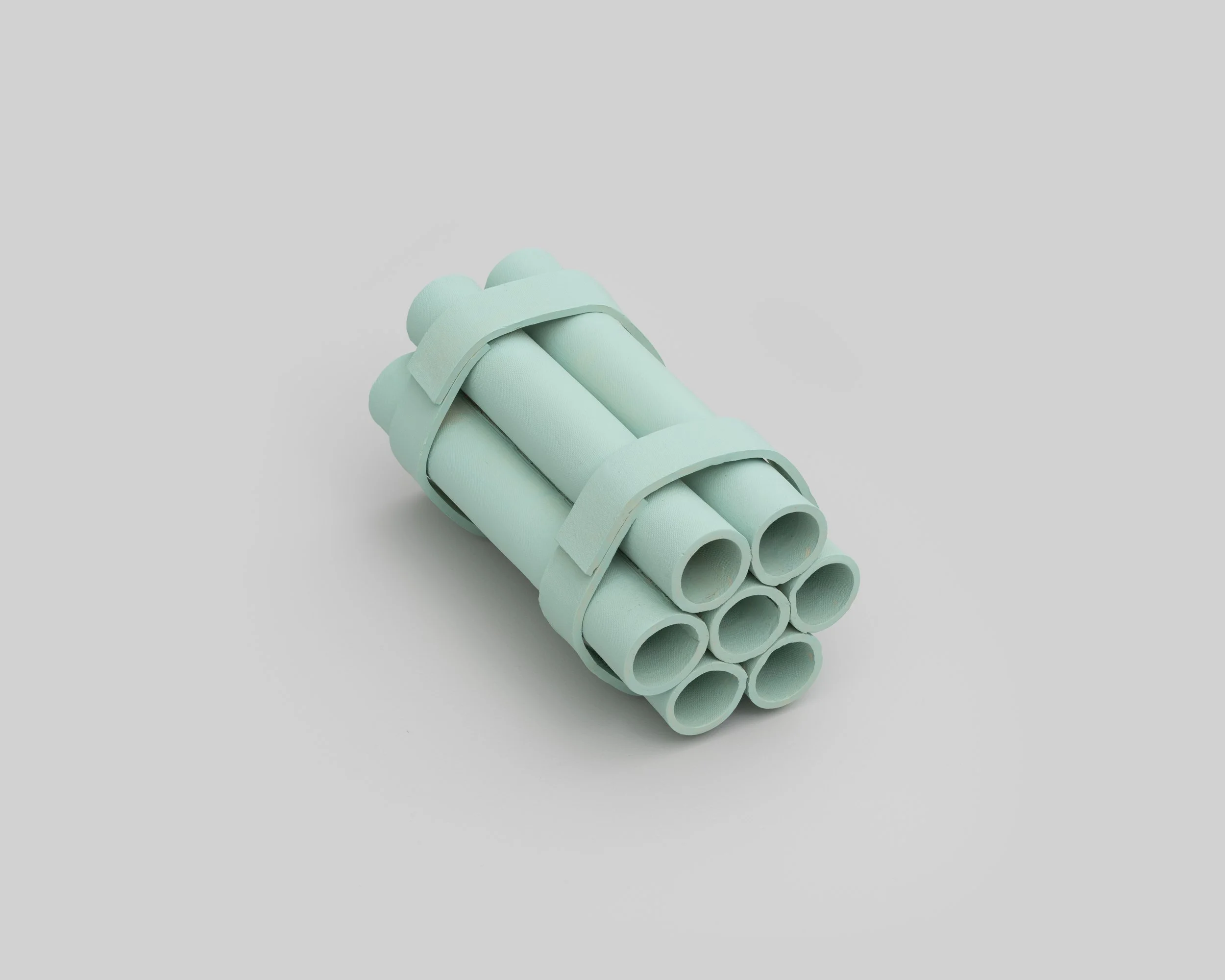
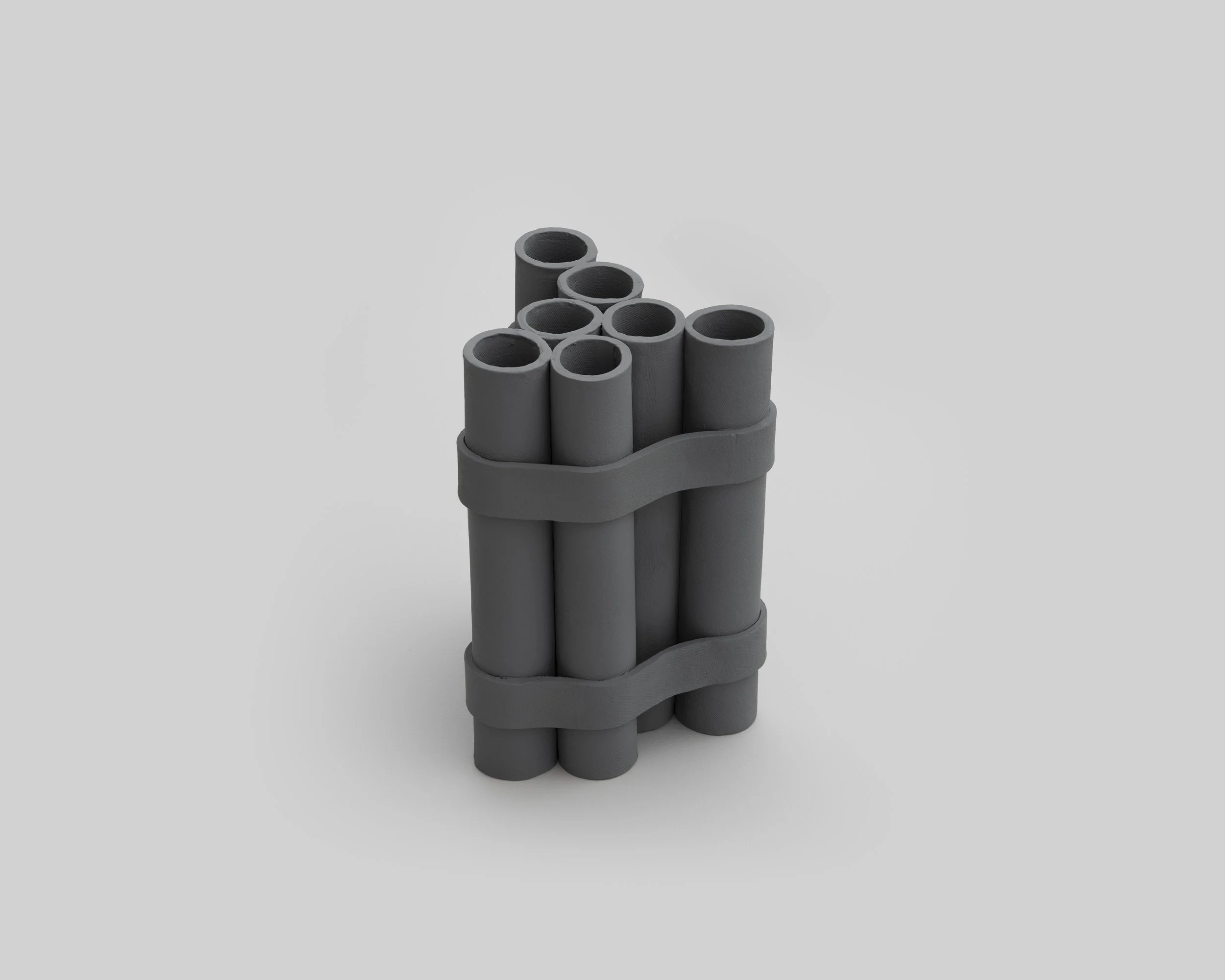
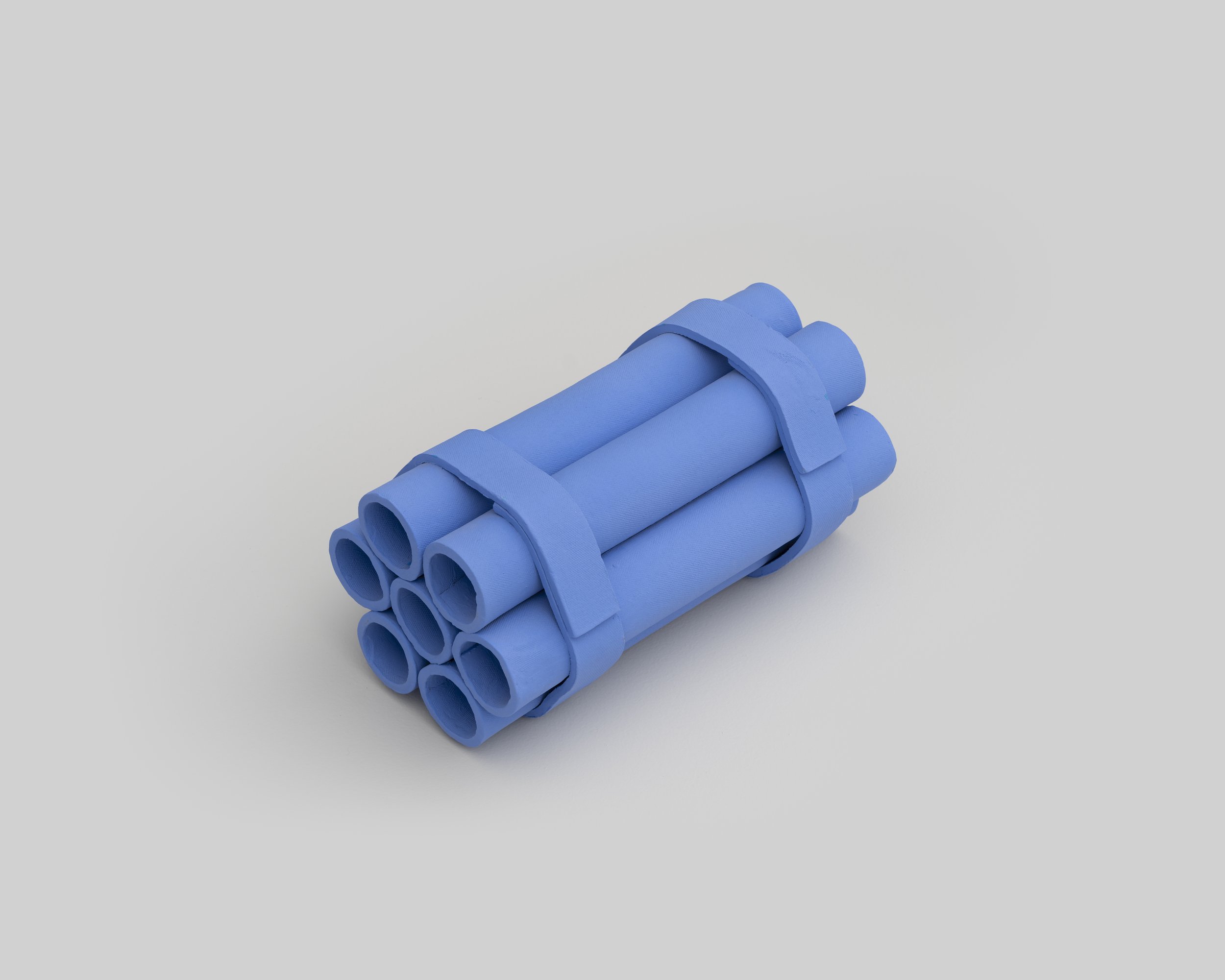
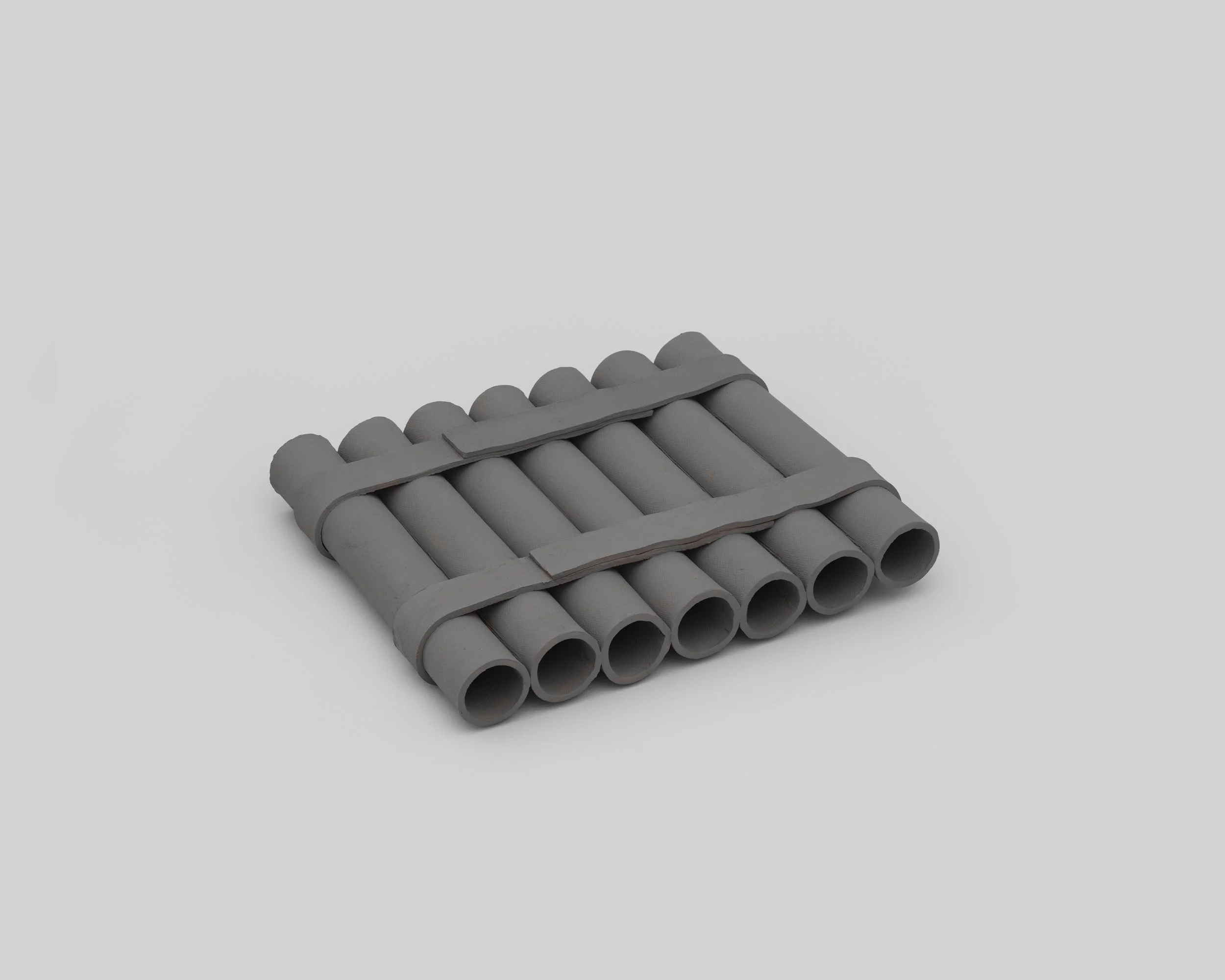
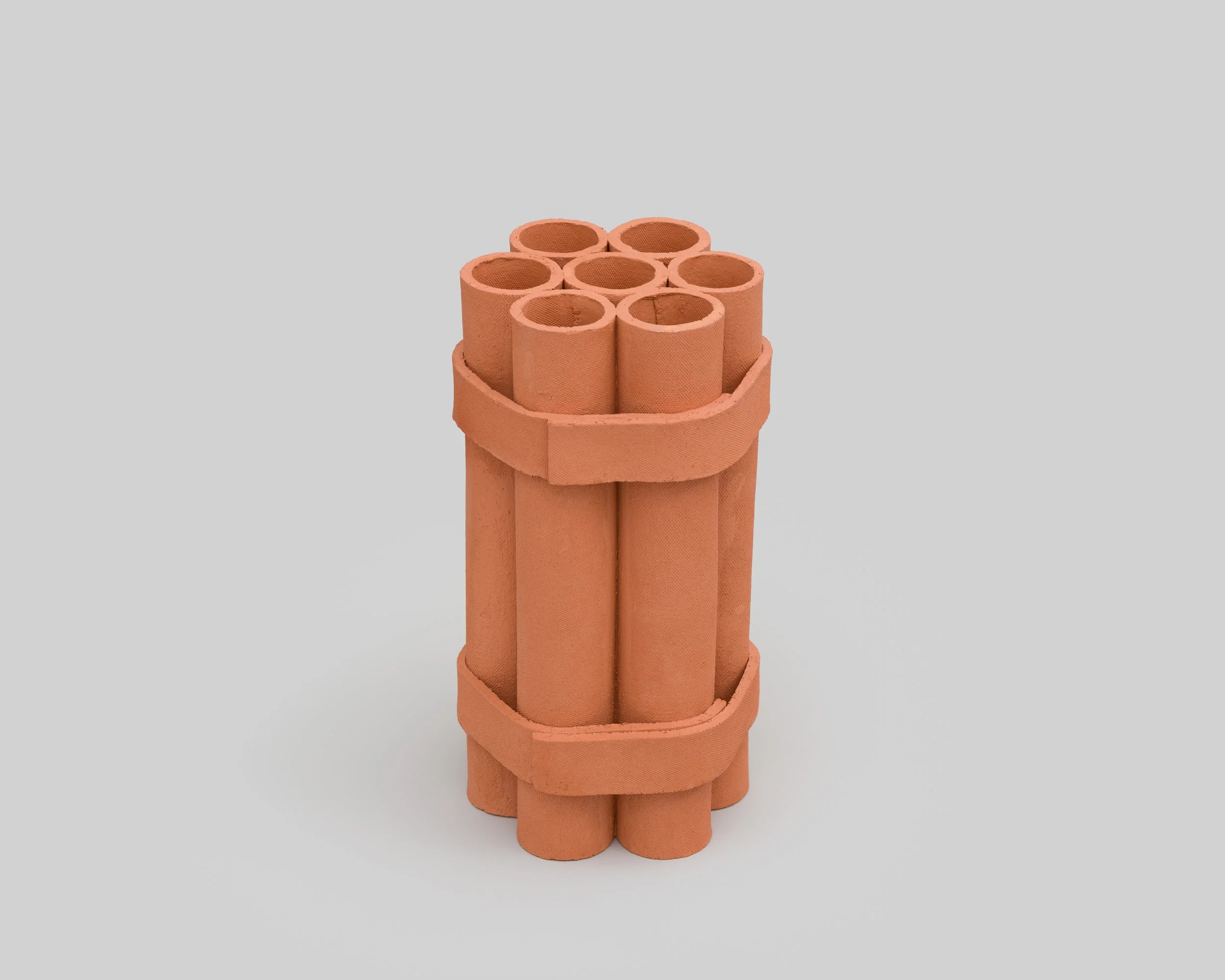
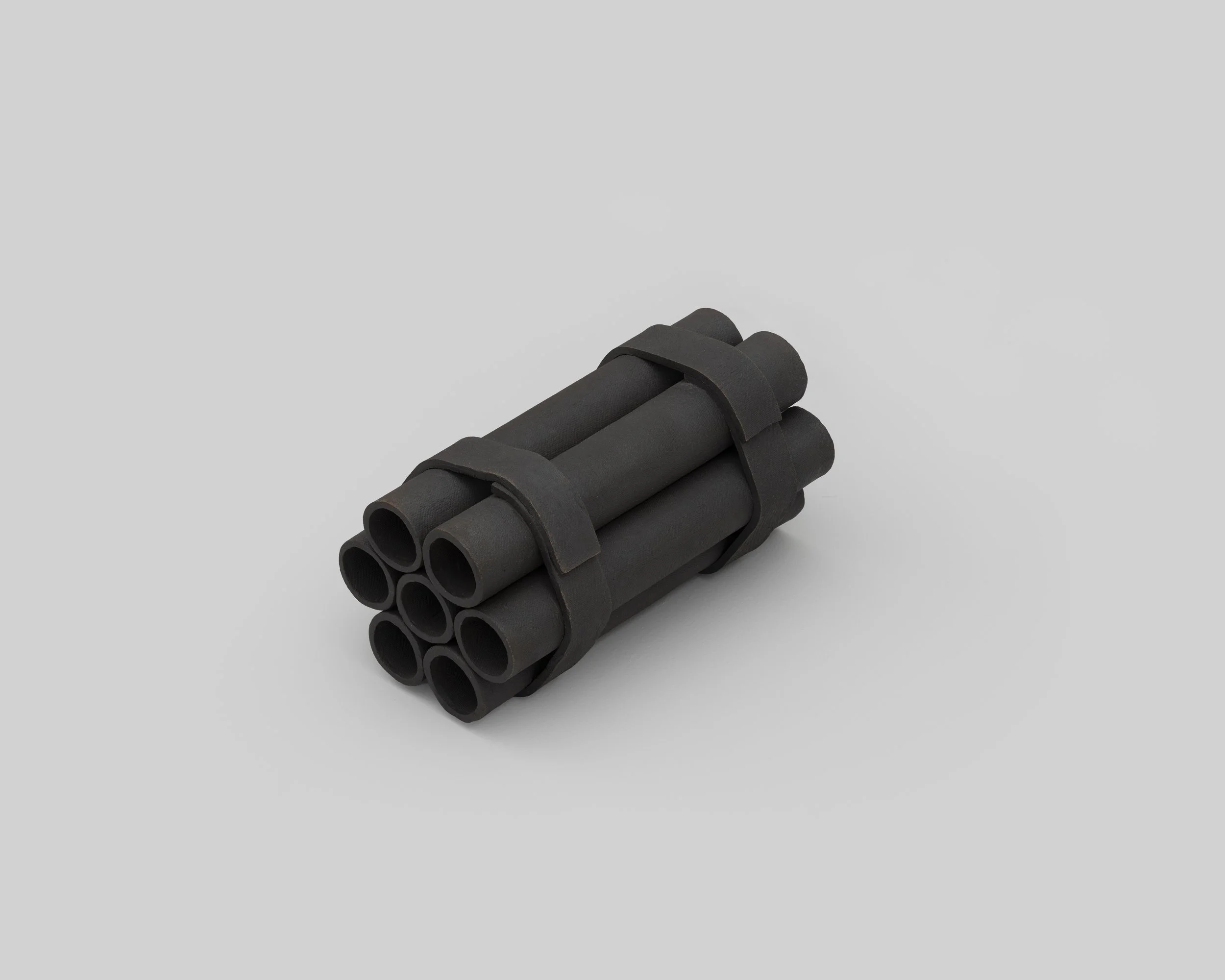
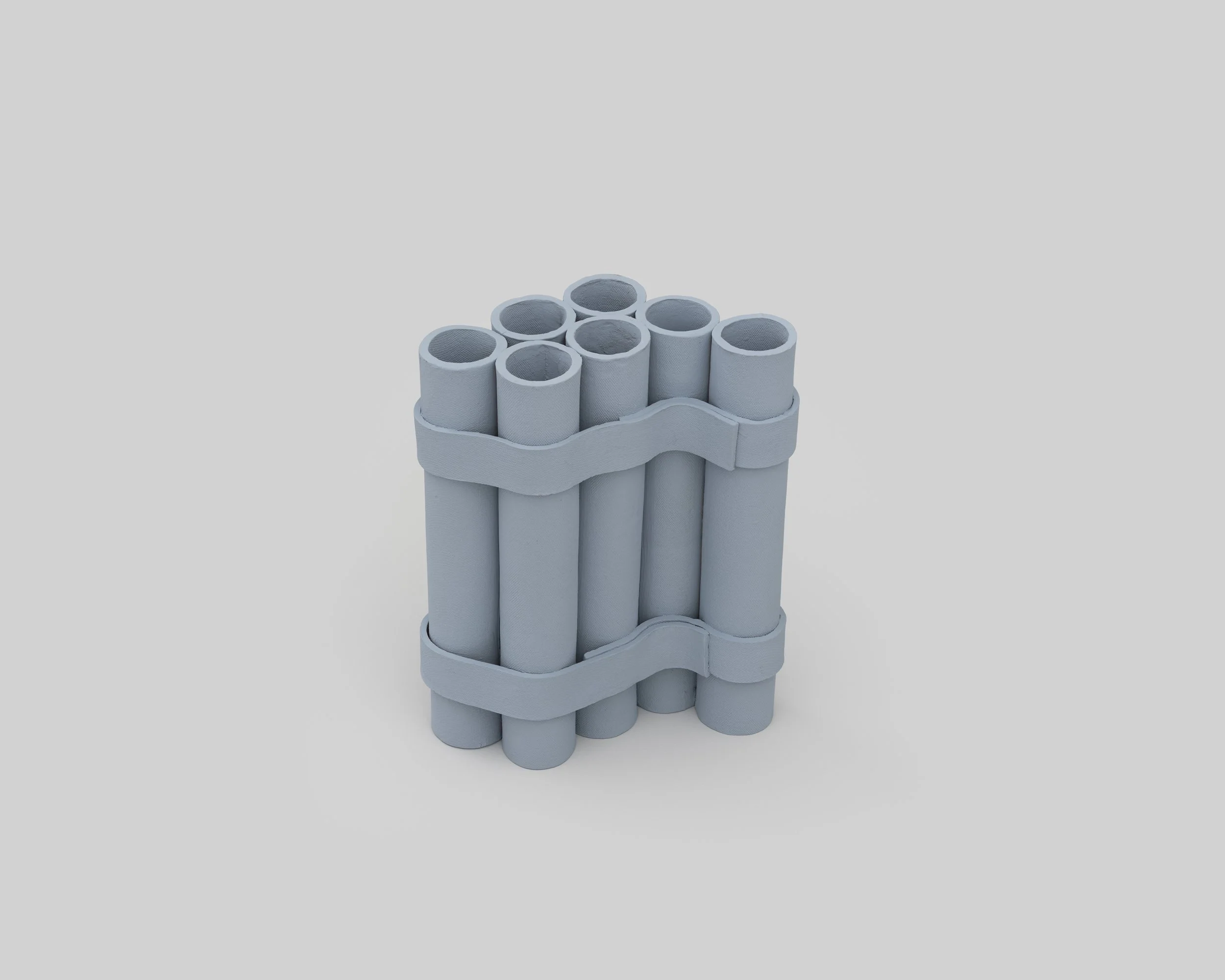
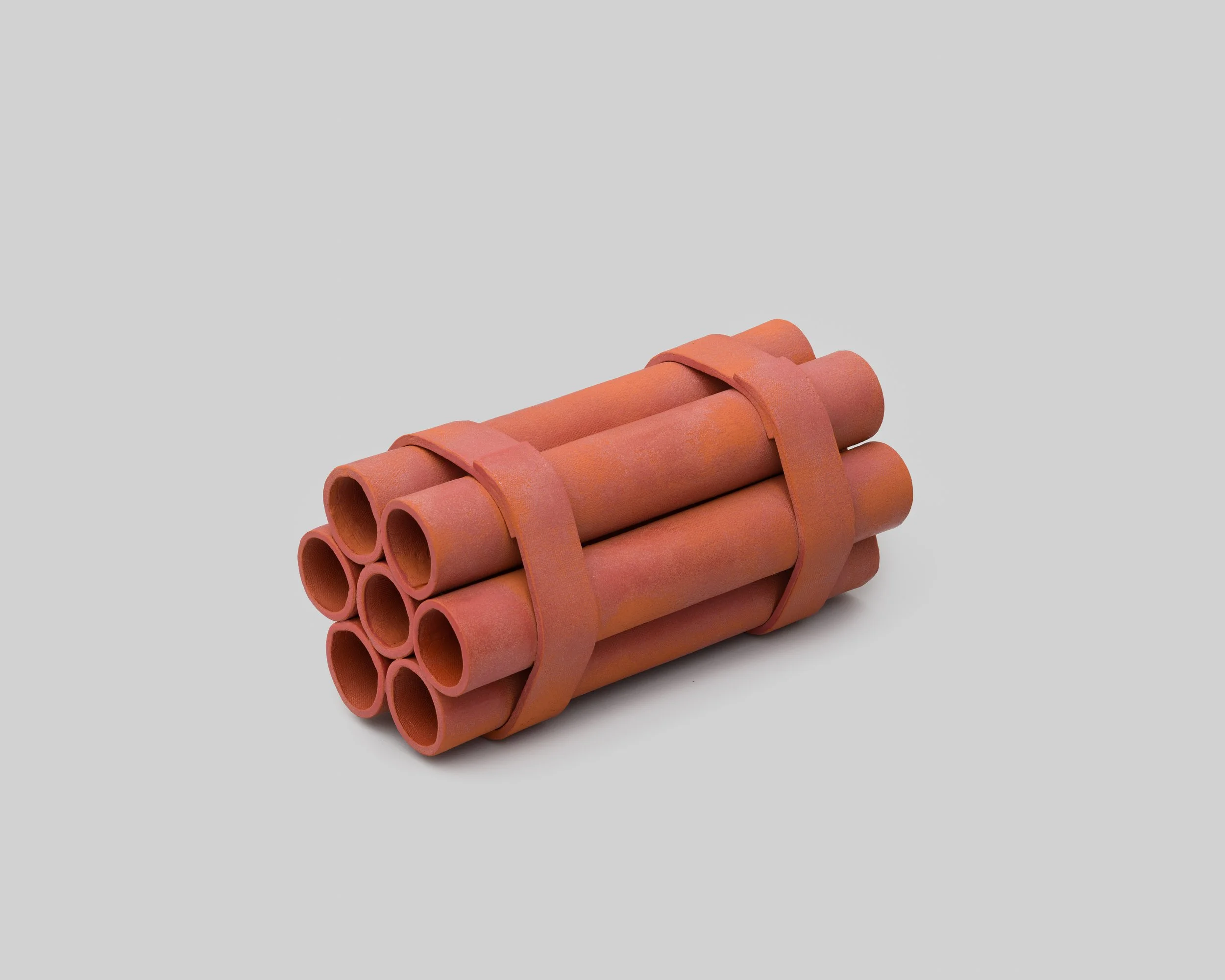
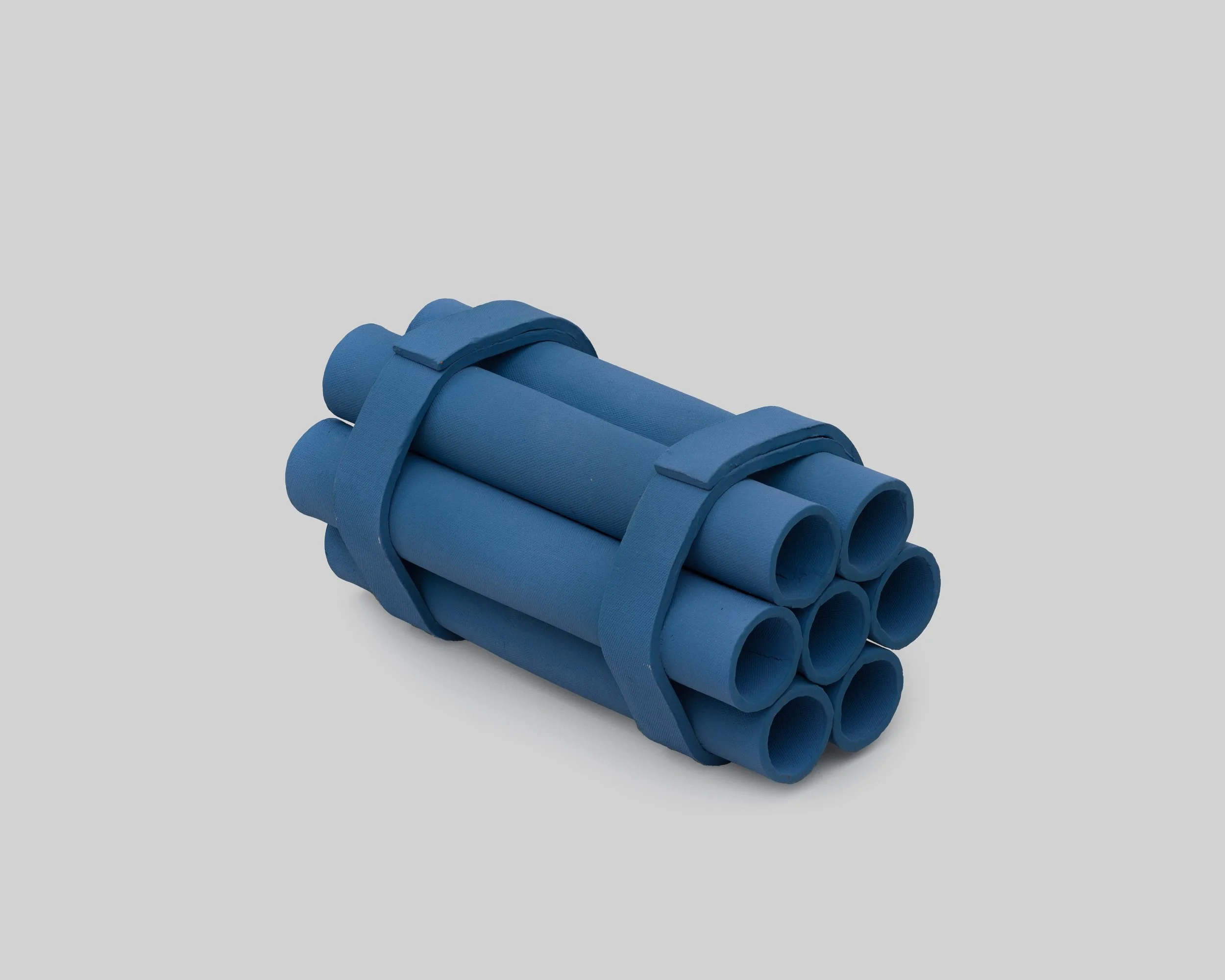
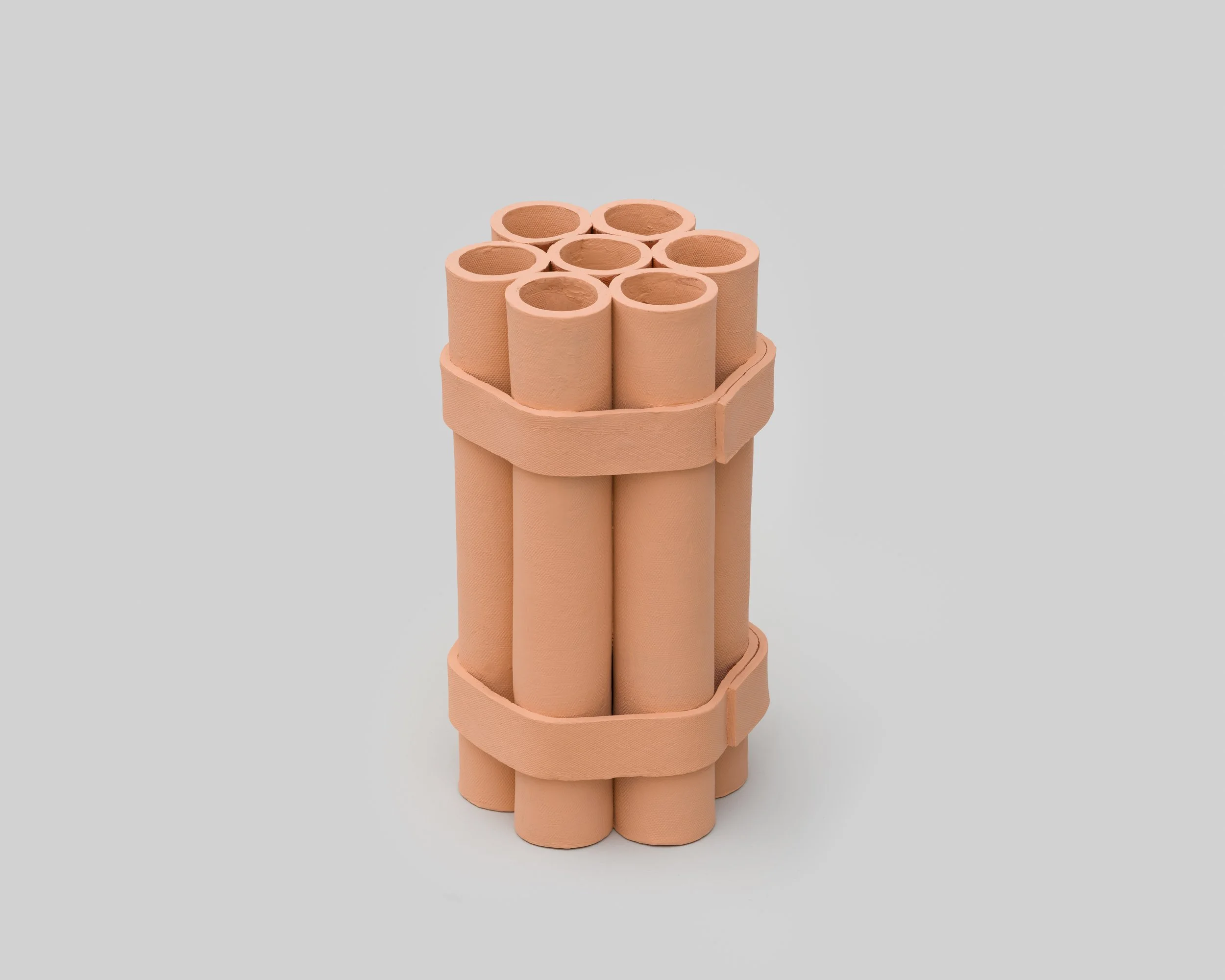
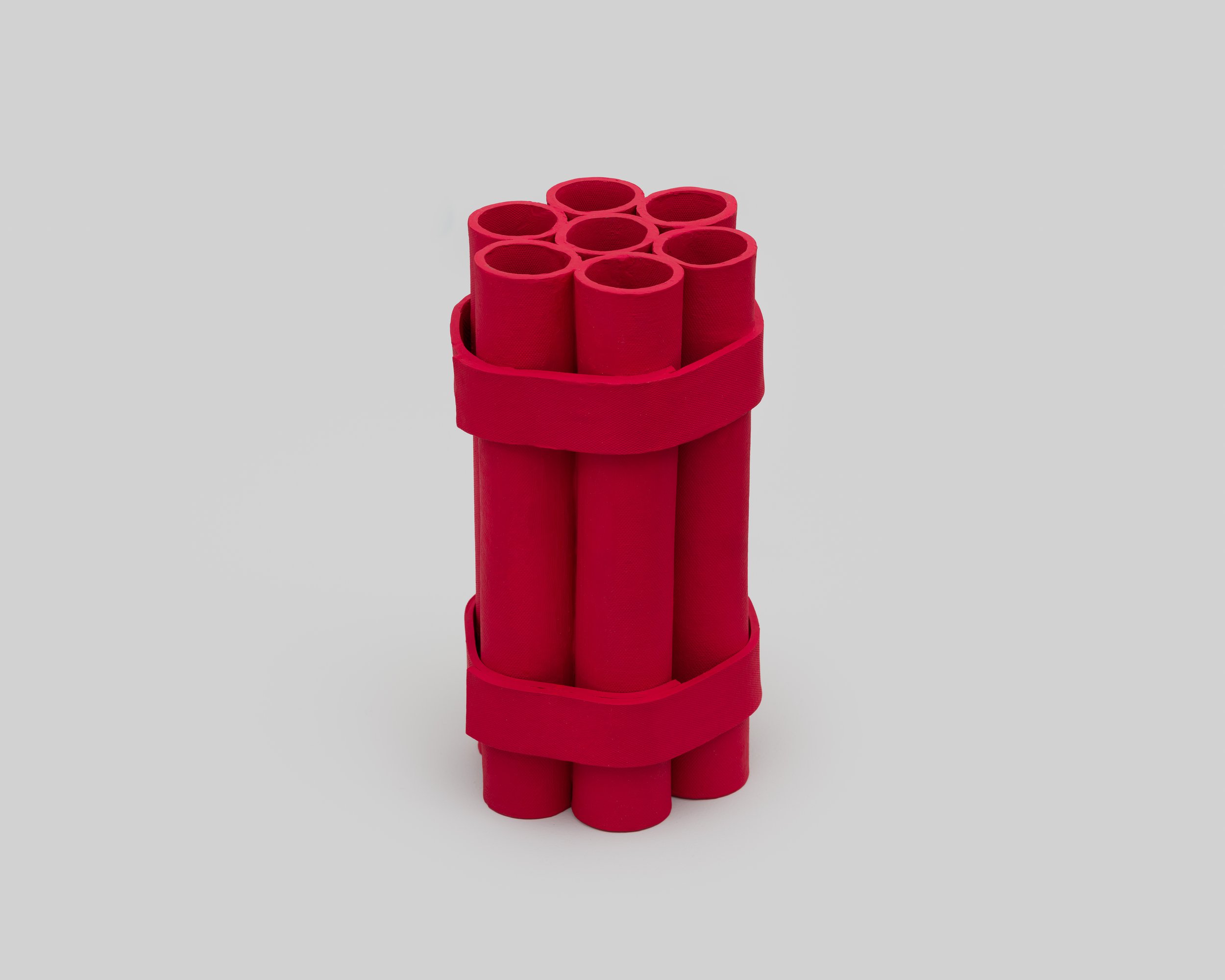
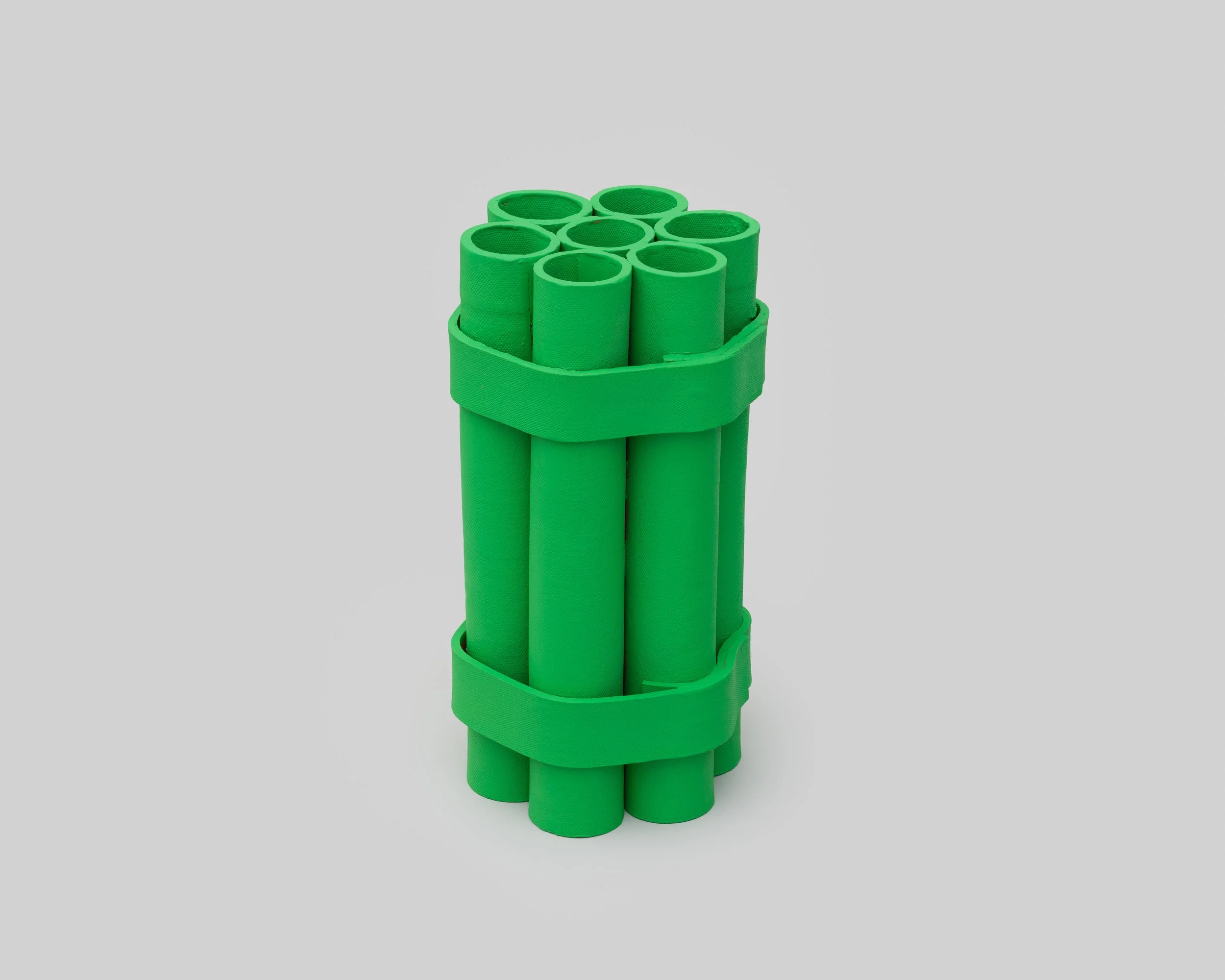
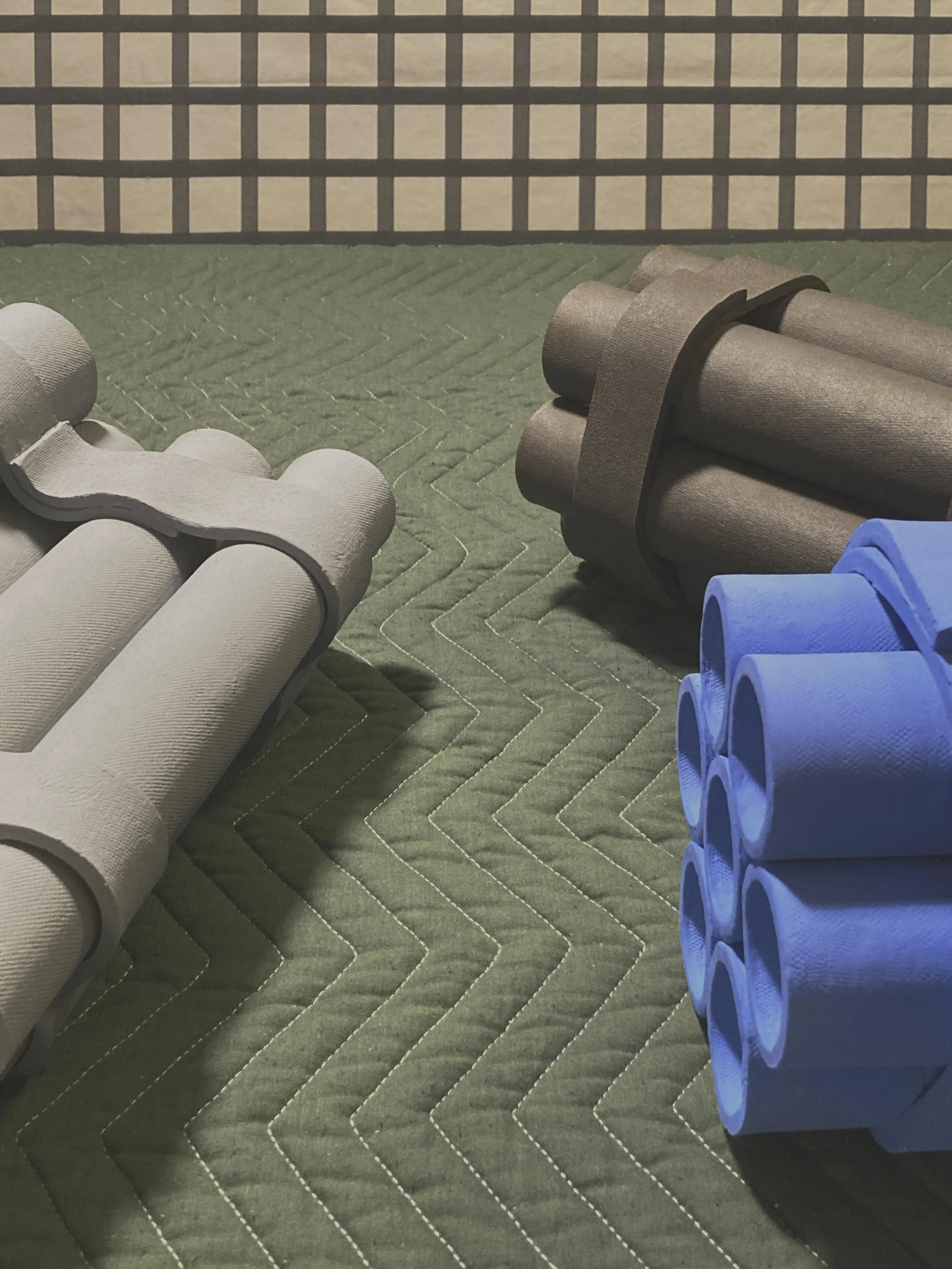
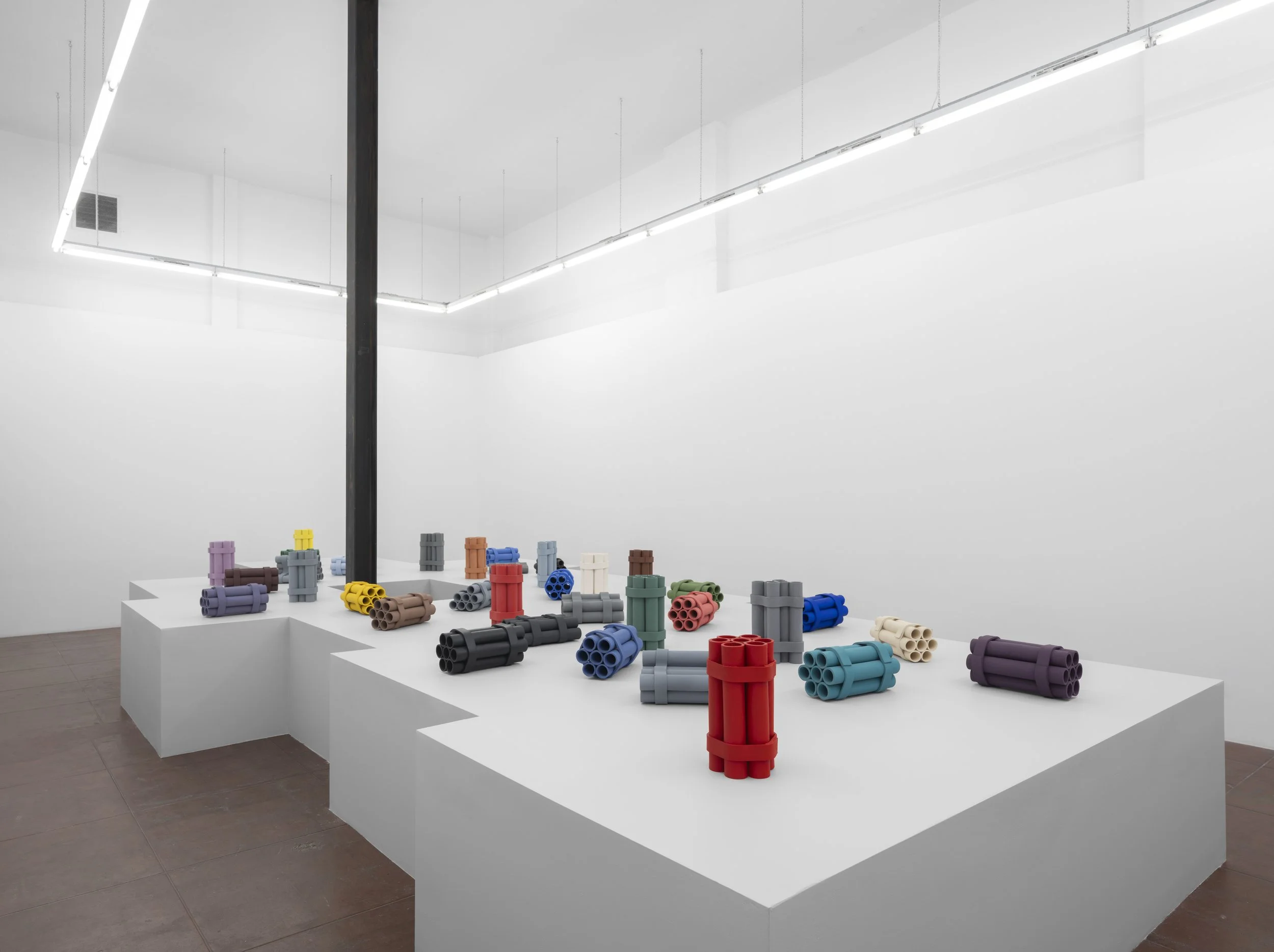
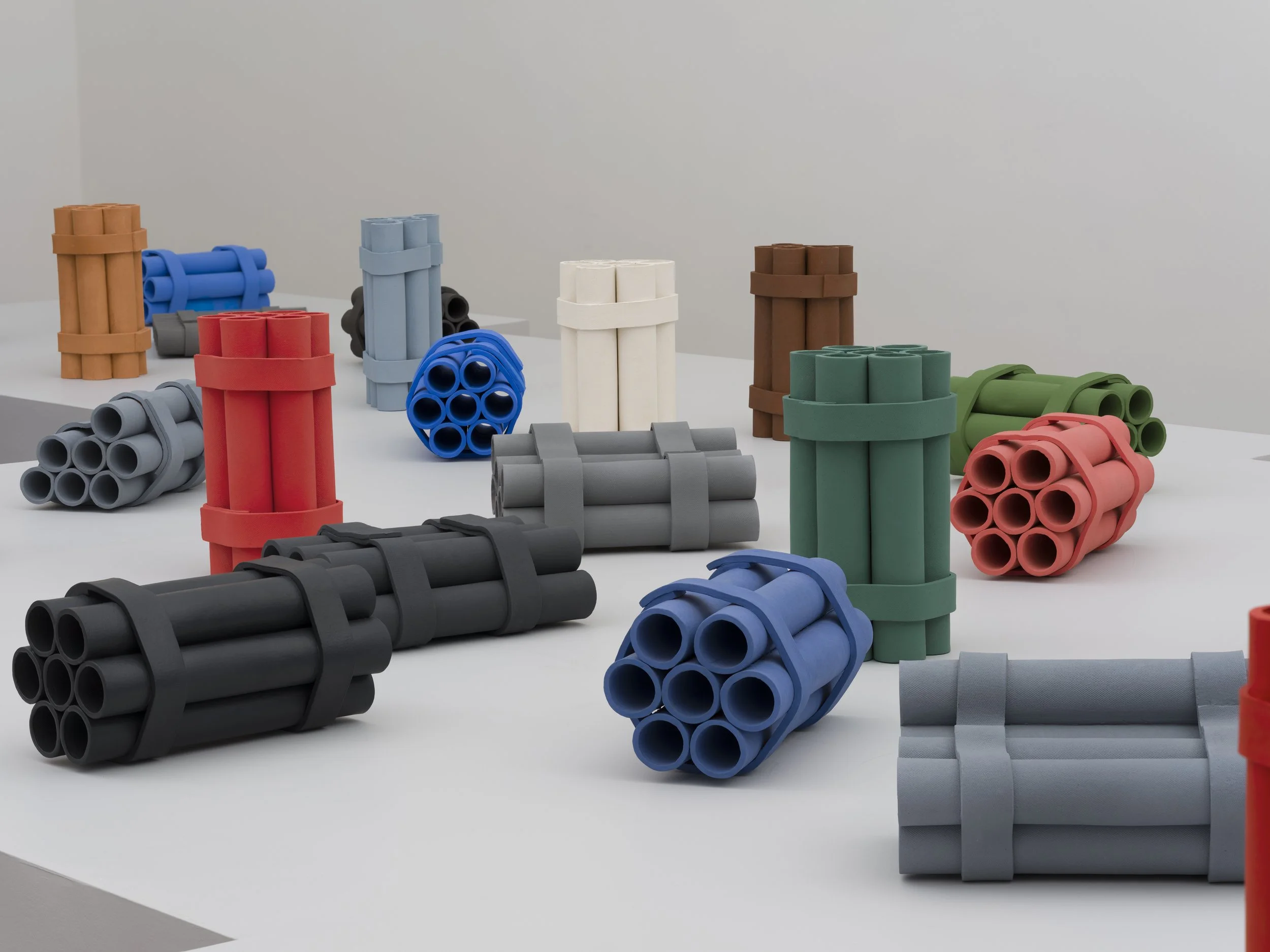
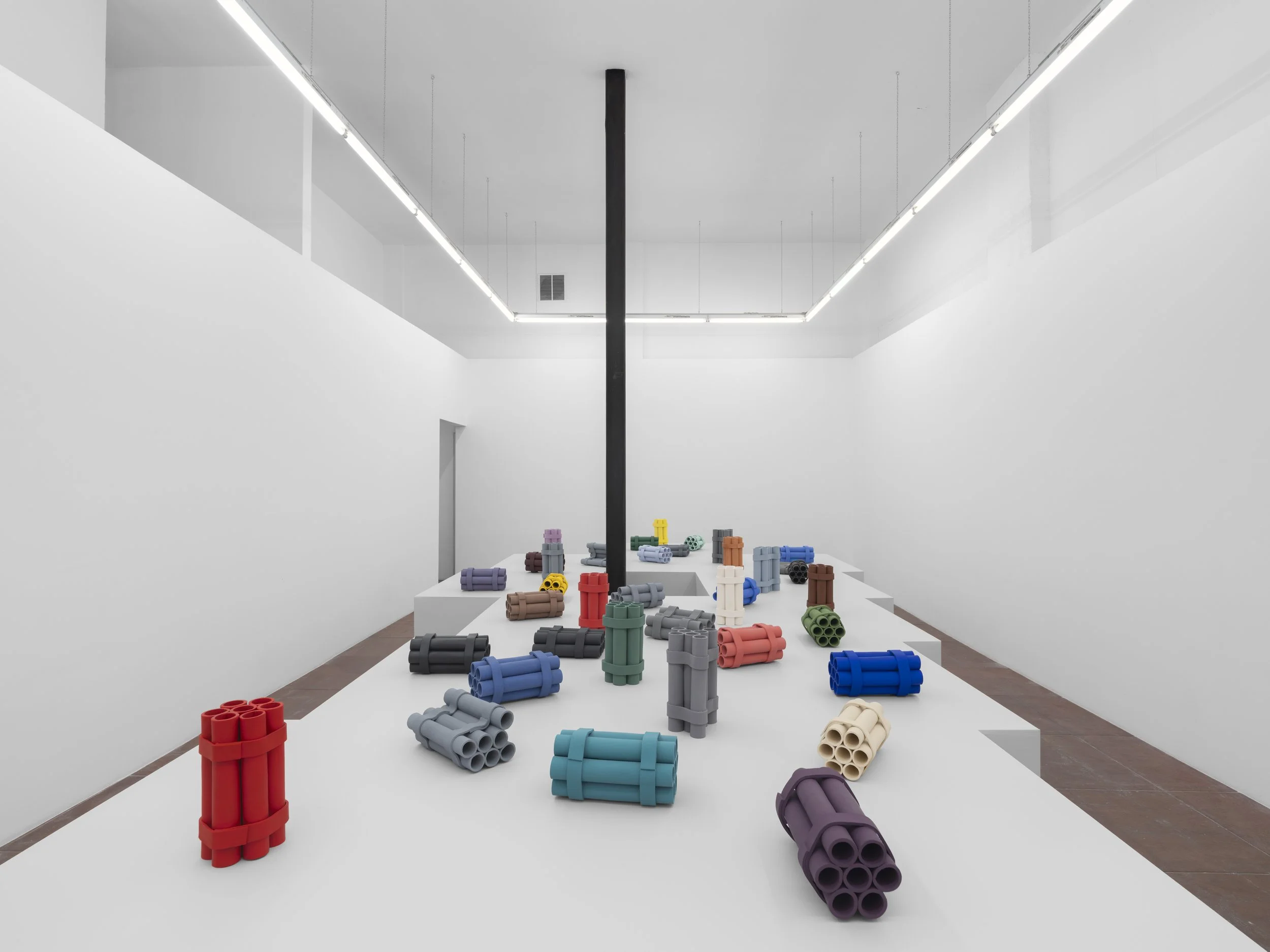
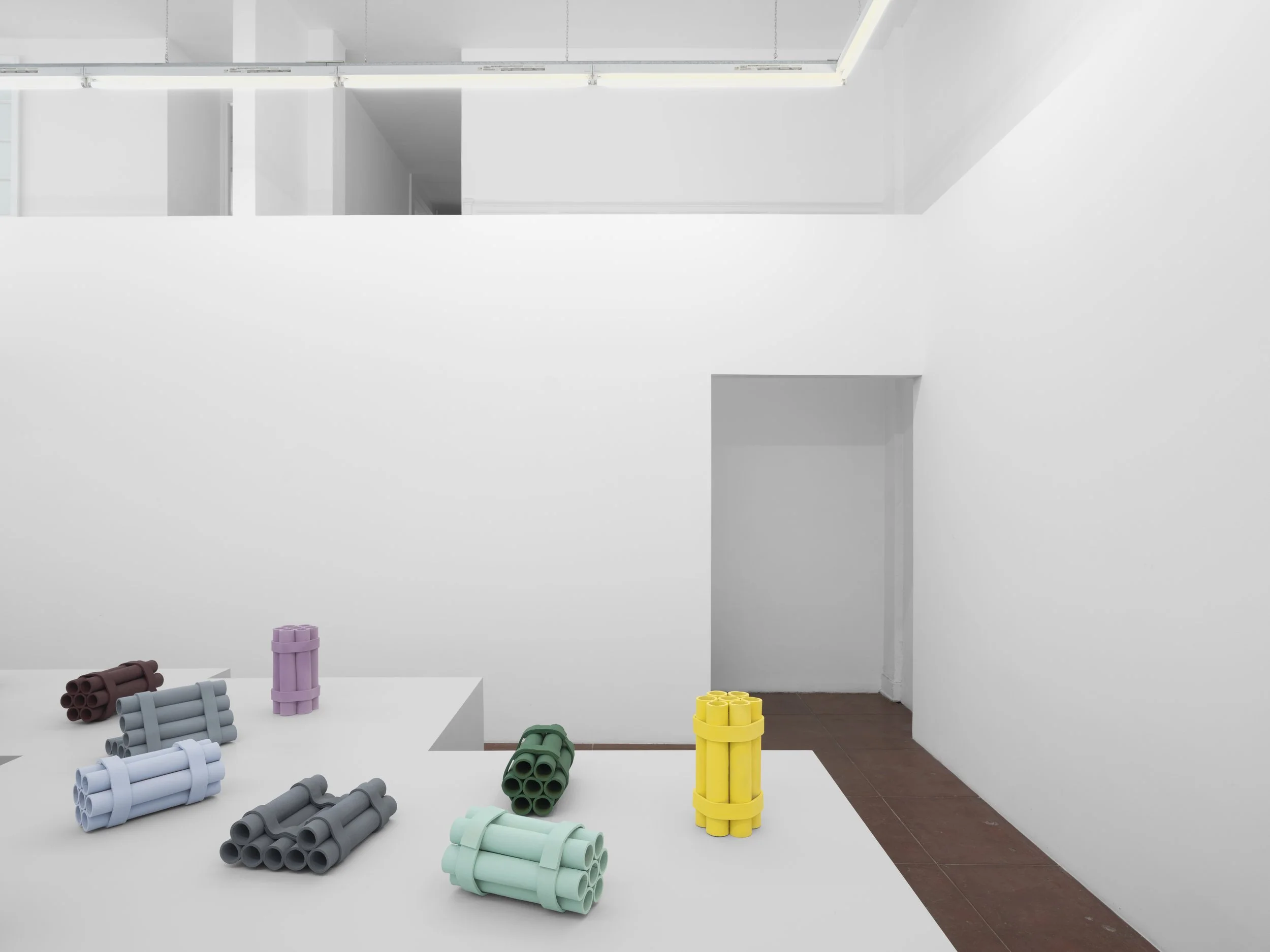
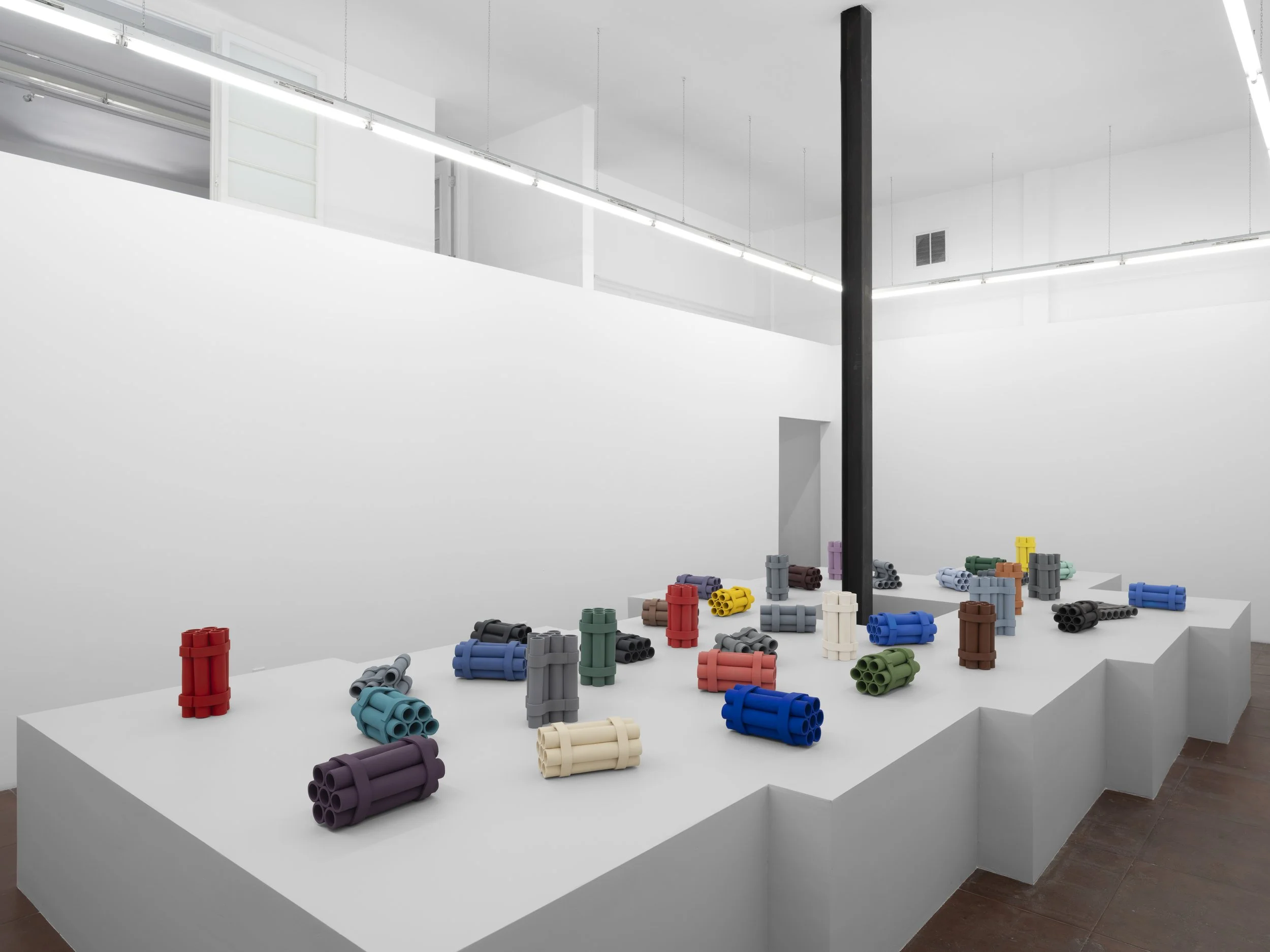
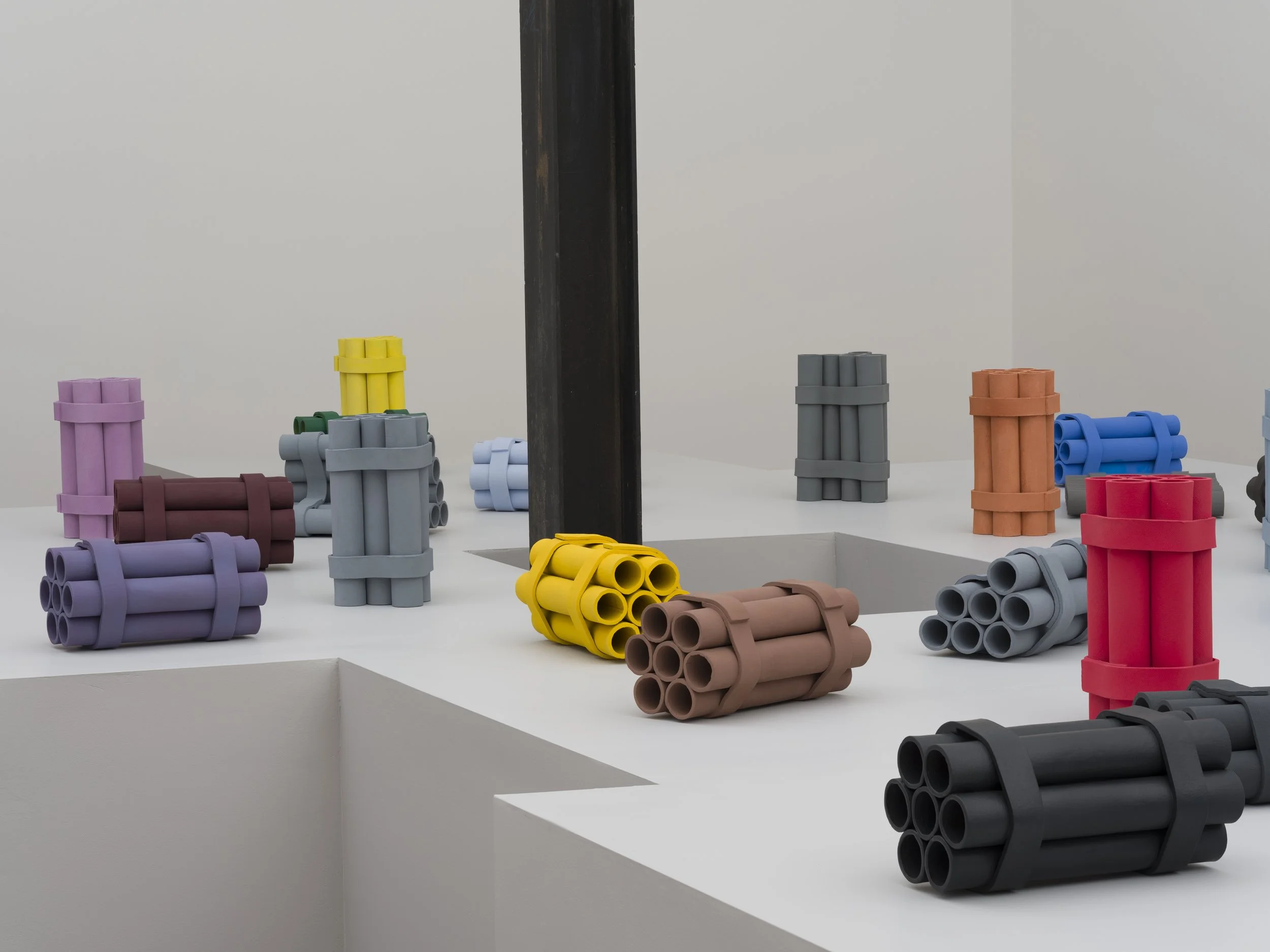
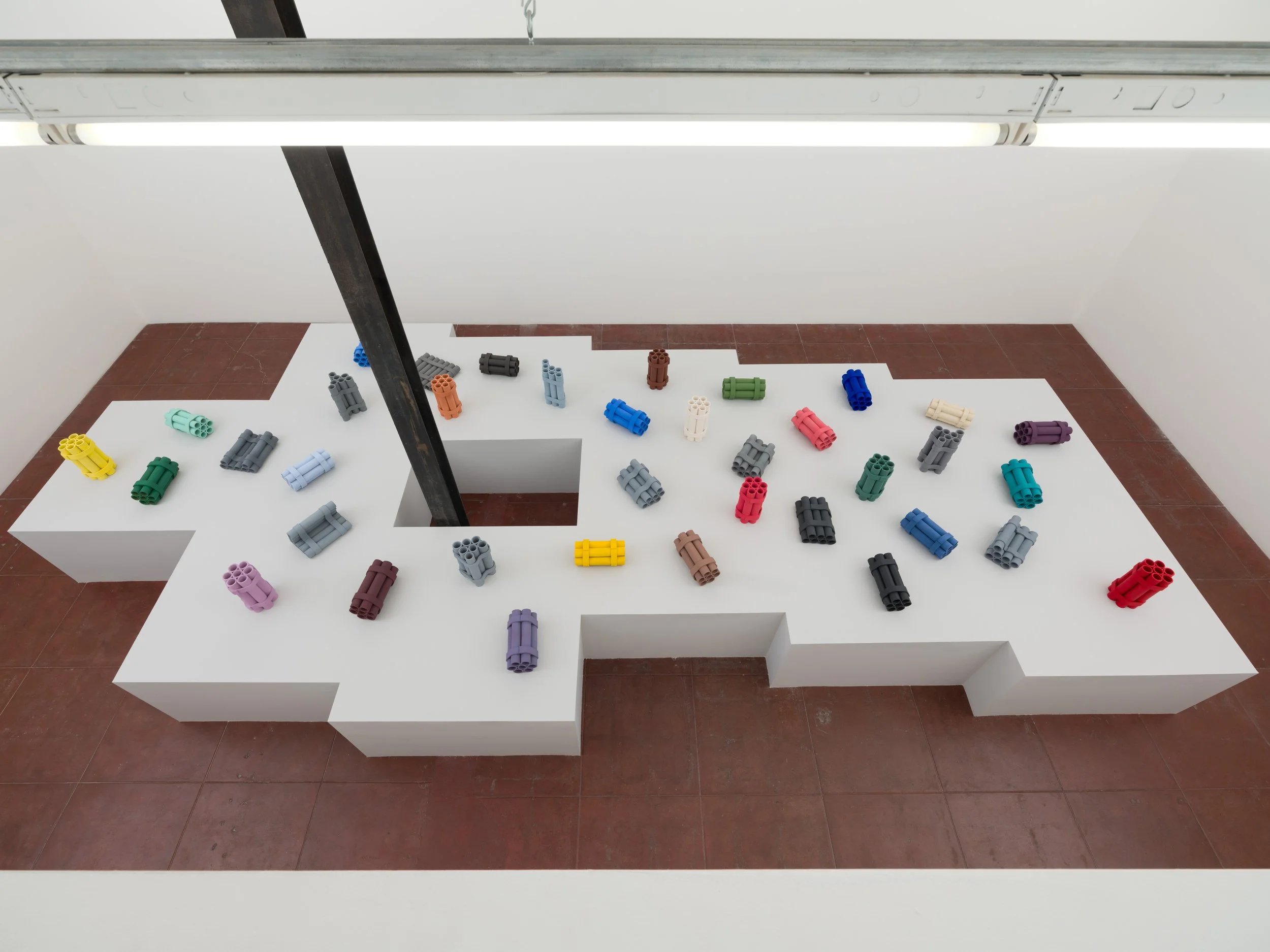
In the large gallery is Sets of Seven Cylinders. Each of these 37 ceramic sculptures are comprised of two elements—cylinders and bands—differentiated by either color or arrangement. They are made by hand, using a slab press that forces clay between sheets of canvas to form a textured plane which is then cut, folded, assembled, fired, glazed, and in some cases painted. Each one is unique.
Taking cues from industrial manufacturing (including weapons production), serial art practices of the 1960s, 70s, and 80s, and an area of practical mathematics called circle packing, these forms also refer to the Fasces*. The majority of the sculptures form a compact clustered nucleus that appear to reference a bundle of dynamite, which, as a symbol, connotes power or potential explosive energy, and brings to mind Friedrich Nietzsche’s famous quote from his autobiography Ecce Homo “I am not a man, I am dynamite.“
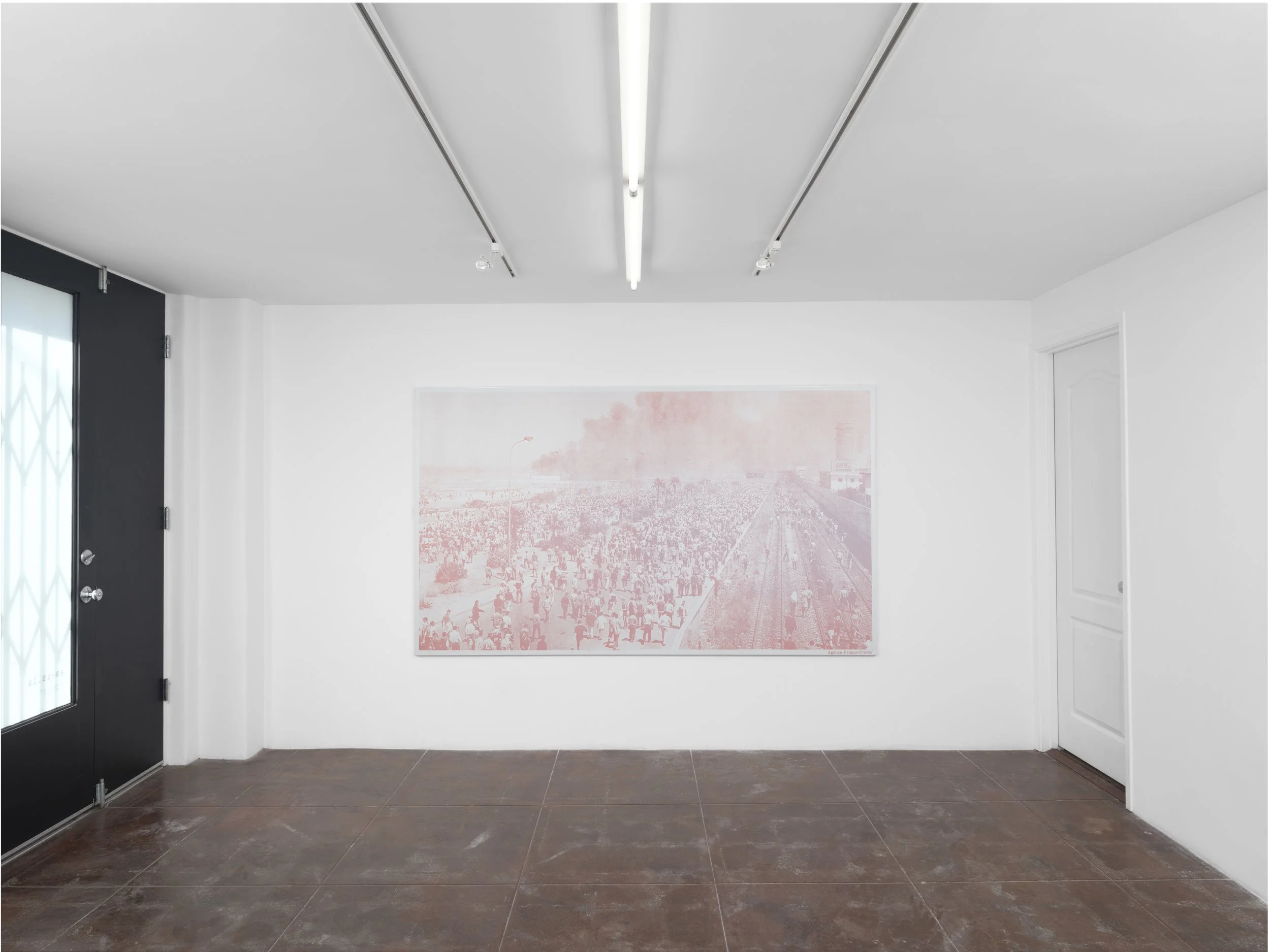
In the small gallery is June 14-18, 2001, a large, enameled silkscreen painting on steel from 2002 produced in the same foundry that makes signs for the Metro in Paris and for railways throughout France. It reproduces an image clipped from the New York Times of June 18, 2001 (page 3), of a massive anti-government demonstration in Algiers four days earlier in the context of long-standing cultural marginalization of the Kabyle people, a Berber ethnic group indigenous to Kabylia in the north of Algeria. This protest was the culmination of months of unrest and rioting ignited by the arrest and murder by the police of a Kabyle high-school student. Following his death, demonstrations were met with violent opposition by paramilitary police, during which hundreds were killed and thousands severely injured. These events came to be known as the Black Spring. In the short term these conflicts resulted in mild political reforms, in the long term they led to significant political and cultural autonomy in the Kabyle region.
The basis of Tobier’s artwork is a critical reflection on the public sphere; the systemic erosion of forms for open exchange and debate; and the structural and legal encroachment on democratic ethos and institutions. Linking the relationship between aesthetics, ideology, and media, Tobier’s work examines the power and effects of contemporary mass communication in both the affirmative sense of its possibilities for cultural production and community building—and also its function as a deleterious means for financial and political gain by way of emotional manipulation. He has used a range of forms and media including sculpture, painting, photography, video, sound, radio, installations, public projects, and theater.
Tobier’s institutional exhibitions include Los Angeles County Museum of Art; Biennale di Venezia; Centre d’Art Bastille, Grenoble; MoCA, Los Angeles; MAK Center, Los Angeles; Galerie fur Zeitgenössische Kunst, Leipzig; Royal College of Art, London; Cooper Union, New York; Hessel Museum of Art at Bard College; UCLA Hammer Museum, Los Angeles. Public collections include the Museum of Contemporary Art Los Angeles, the UCLA Hammer Museum, and Mumok, Vienna, Austria.
* The Fasces is an ancient Roman symbol of imperial authority and unity later appropriated to adorn numerous Federal sites in the U.S. including the Lincoln Memorial and the ‘Well’ of the House of Representatives, which in one of its first official acts in 1789, adopted the fasces as the emblem of its sergeant at arms. In the U.S. context the fasces represents the unified strength of the individual American states. In the early 20th century Italy Benito Mussolini co-opted the form and the name when he founded the Partito Nazionale Fascista (PNF). In Italian the word fascio, means a bundle or group.
Front Gallery
Main Gallery
Works